
Blog
Are Rosaries Sold at the Vatican Blessed? The Catholic Answer Most People Don’t Know

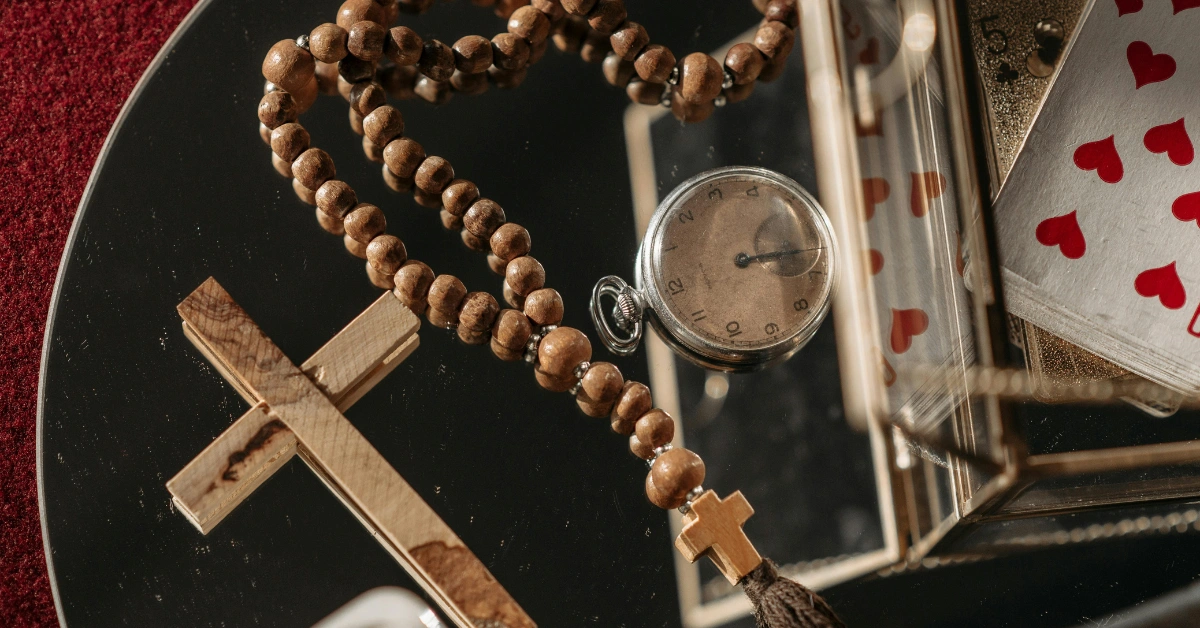
The answer surprises most Catholics who ask it — and understanding why requires a brief but essential lesson in Catholic canon law.
Rosaries sitting on shelves in Vatican gift shops — even the shops located inside Vatican City walls, even the shops steps from Saint Peter’s Basilica, even the shops whose owners claim papal connection — are not blessed. They cannot be. Catholic canon law explicitly prohibits the sale of blessed objects, and any rosary sold for a price loses its blessing at the moment of sale. A rosary on a shelf for purchase is, by canonical definition, an unblessed object regardless of where that shelf stands.
This is not a technicality. It is a theological principle with a name — simony — and the Church has condemned it since the earliest centuries of Christian history.
Understanding this distinction does not diminish the extraordinary devotional value of a Vatican rosary. It clarifies what that value actually is — and reveals the precise and beautiful way in which a genuinely blessed Vatican rosary is obtained.
What Catholic Canon Law Says About Selling Blessed Objects
The prohibition on selling blessed objects is rooted in Canon 1190 of the Code of Canon Law:
“It is absolutely forbidden to sell sacred objects.”
A sacred object — in canonical terminology — is any object that has been set apart for divine worship through a formal blessing or consecration by a minister of the Church. Once a rosary is blessed by a priest, a bishop, or the Pope himself, it becomes a sacred object whose sale is canonically prohibited.
The theological reasoning behind this prohibition reaches back to the Acts of the Apostles. Simon the Magician — seeing the power of the Holy Spirit conferred through the laying on of hands by the Apostles — offered money in exchange for that spiritual power. Peter’s response was unambiguous: “May your money perish with you, because you thought you could buy the gift of God with money.”
From this episode the Church derived the concept of simony — the buying or selling of spiritual things, including blessed objects. The Catechism of the Catholic Church addresses it directly in paragraph 2121, describing simony as a corruption of the sacred that the Church has always and consistently condemned.
The practical consequence for Vatican rosaries is straightforward — any rosary available for purchase, anywhere, is unblessed at the point of sale. The blessing must come after the purchase, not before it.
So What Are Vatican Rosaries — And Why Do They Matter?
If Vatican rosaries are not pre-blessed, their value rests on two distinct foundations that remain extraordinary regardless of blessing status.
Italian craftsmanship of the highest standard — The rosaries produced by Vatican suppliers and Italian artisans connected to the Vatican gift trade are among the finest devotional objects available anywhere in the world. Crafted from genuine Italian crystal, sterling silver, olive wood, semi-precious stones, and Murano glass — these rosaries carry the full weight of the Italian artisan tradition that has been producing Catholic devotional objects of unsurpassed quality for over seven centuries.
The same tradition that produced the rosaries sold near Saint Peter’s Square is the tradition behind every authentic Italian rosary in our collection — the craftsmanship of Italian workshops whose entire purpose has been the production of sacred objects worthy of Catholic prayer.
Proximity to the center of Catholic faith — A rosary purchased in Rome, near the tomb of Saint Peter, in the shadow of the basilica built over the first Pope’s martyrdom, carries an associative connection to the universal Church that no rosary purchased elsewhere can quite replicate. This is not a sacramental claim — it is a devotional reality that Catholic tradition has always understood and valued.
How to Get a Rosary Blessed by the Pope — The Right Way
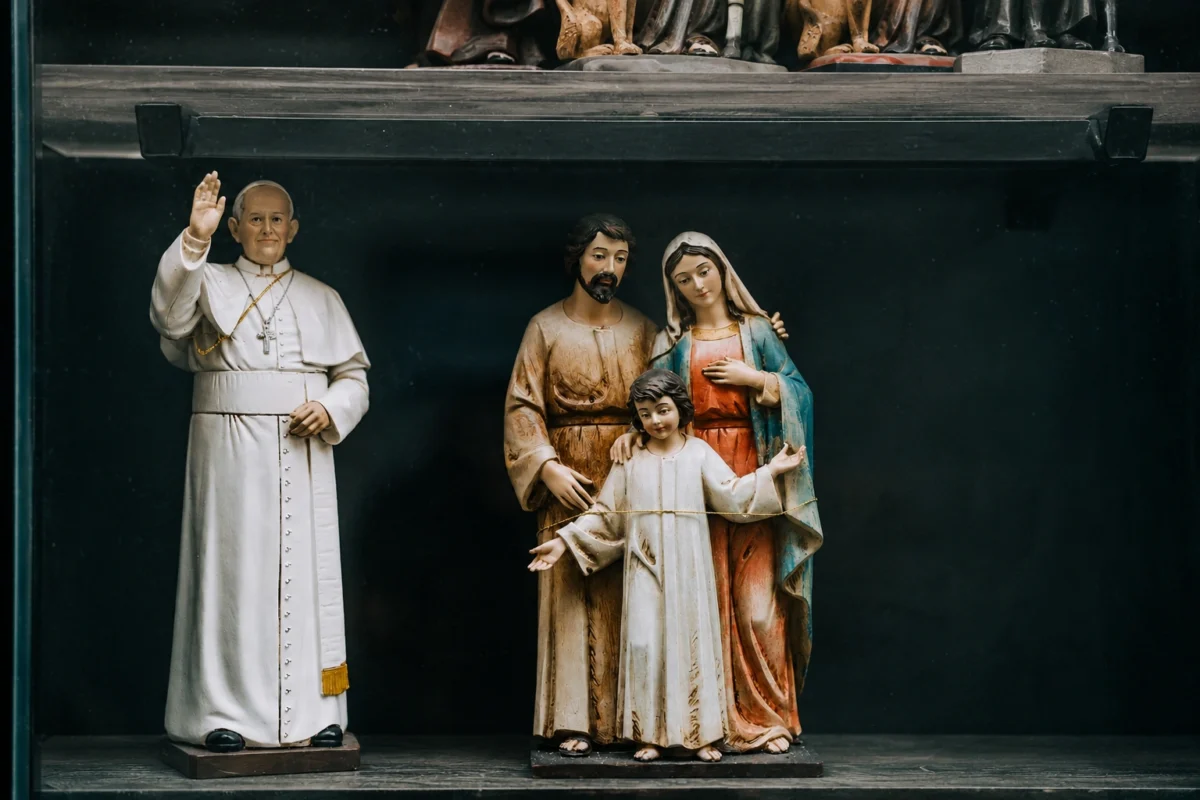
The papal blessing on a rosary is one of the most treasured sacramentals in Catholic devotional life — and obtaining it genuinely requires understanding how the blessing actually works.
The Wednesday General Audience
Every Wednesday when the Pope is in Rome, he holds a General Audience in Saint Peter’s Square or the Paul VI Audience Hall — a public gathering attended by thousands of Catholics from around the world. At the conclusion of the audience, the Pope imparts a general blessing over the crowd and over all objects held up for blessing.
This is the primary and most authentic way to obtain a papal blessing on a rosary:
Step 1 — Purchase an unblessed rosary before the audience — from Vatican gift shops, from the shops along Via della Conciliazione leading to Saint Peter’s Square, or from any reputable Italian supplier.
Step 2 — Obtain tickets for the Wednesday General Audience through the Vatican’s official ticket office — the Prefecture of the Papal Household — which distributes free tickets through the online booking system at the Vatican website.
Step 3 — Attend the audience with the rosary and hold it up during the papal blessing at the conclusion. The blessing imparted over the crowd extends to every object held up for blessing — including the rosary in your hands.
Step 4 — The rosary is now a fully blessed sacramental — a sacred object set apart for devotional use, carrying the specific grace of a papal blessing that Catholic tradition regards as among the most powerful blessings available.
Through Authorized Vatican Suppliers
For Catholics who cannot travel to Rome, several authorized suppliers connected to the Vatican gift trade offer a specific service — purchasing an unblessed rosary and then physically taking it to a Vatican priest or papal audience for blessing before shipping it to the buyer.
This service is legitimate when offered by verified suppliers with genuine Vatican connections and transparent documentation of the blessing received. The key indicators of authenticity are a specific date of blessing, the name of the priest or event at which the blessing was imparted, and a certificate of authenticity that documents the blessing rather than simply asserting it.
What to avoid — rosaries sold online claiming papal blessing without documentation, without a specific blessing date, or with language like “blessed in the spirit of the Vatican” that substitutes vague association for genuine sacramental reality.
The Difference Between a Priestly Blessing and a Papal Blessing
Not all rosary blessings are identical in their canonical status — and understanding the difference helps Catholics make informed devotional choices.
A priestly blessing — imparted by any validly ordained Catholic priest — is the standard blessing that transforms a rosary into a fully empowered sacramental. It attaches to the rosary the indulgences associated with the rosary devotion and officially sets the object apart for sacred use. Any Catholic priest can bless a rosary — the blessing is brief, requires no appointment in most parishes, and is the most accessible way to obtain a blessed rosary anywhere in the world.
An episcopal blessing — imparted by a bishop — carries a greater dignity than a priestly blessing due to the fullness of holy orders the bishop possesses. Rosaries blessed by bishops connected to specific shrines — the shrine of Lourdes, the shrine of Fatima, the shrine of Guadalupe — are particularly treasured because the blessing combines the authority of an episcopal minister with the specific Marian charism of the shrine.
A papal blessing — imparted by the Pope — carries the highest dignity of any blessing available within the Catholic Church. The Pope possesses the fullness of episcopal authority as Bishop of Rome and successor of Saint Peter, and the blessing he imparts over objects carries that authority in its most complete expression.
The rosary blessed by a Catholic priest in your local parish is a fully valid and powerfully effective sacramental — identical in canonical status and spiritual efficacy to a rosary blessed by the Pope. The papal blessing adds a dimension of devotional significance and connection to the universal Church that the faithful have always treasured — but it does not add a category of grace that the priestly blessing lacks.
Why Authentic Italian Rosaries Matter for Blessed Objects
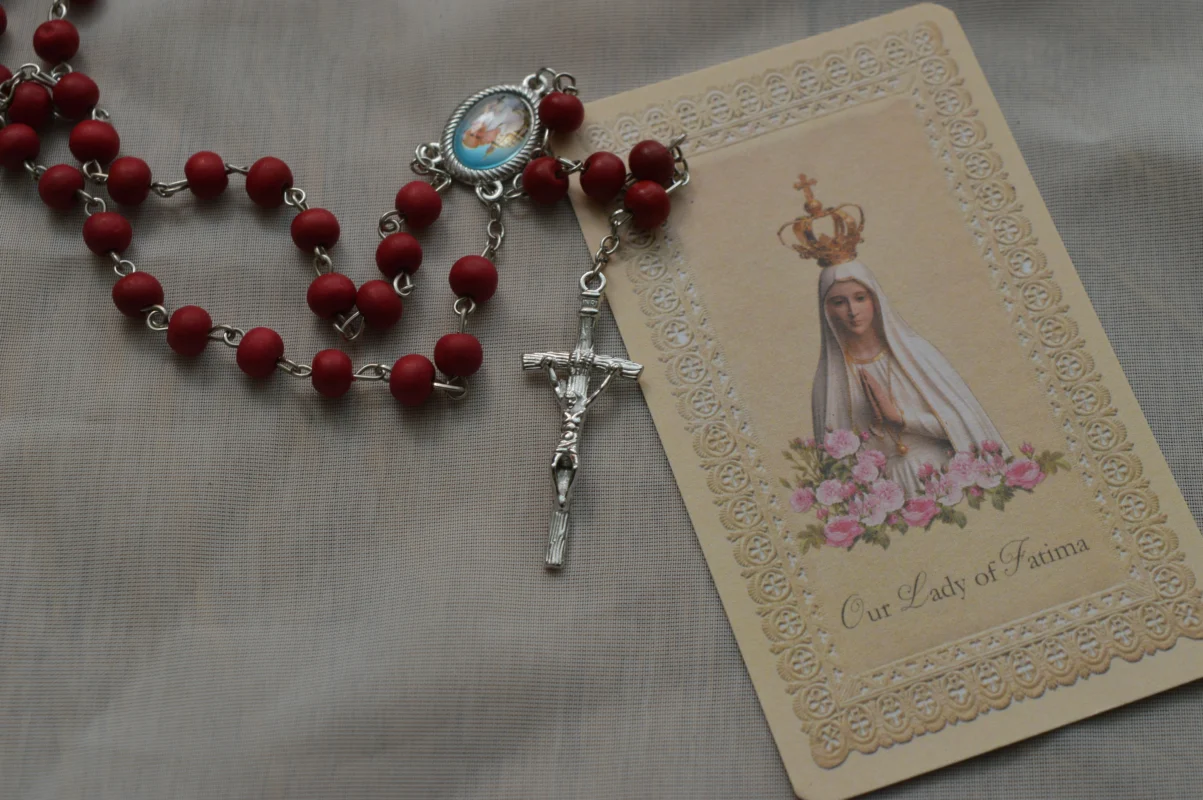
The blessing of a rosary transforms the object into a sacred instrument — but the quality of the object being blessed determines how effectively it serves the prayer the blessing is meant to support.
A poorly made rosary blessed by the Pope is still a papal blessed rosary. But its beads, too light to be felt during prayer, fail the prayer at every decade. Its crucifix, too flat and featureless to communicate the reality of the Passion, reduces the theological heart of the rosary to a decorative cross. Its links, too weak for daily use, break within months of faithful prayer.
The blessing sanctifies the object. The craftsmanship determines whether the object can carry that blessing into the daily prayer life of the person who holds it.
This is why the Italian artisan tradition that has supplied the Vatican gift trade for centuries matters — not simply for the beauty of the object but for its capacity to serve as a faithful instrument of Catholic prayer across decades of daily use.
Our Italian natural wood rosary and crystal rosary necklaces are crafted to exactly this standard — objects built for the blessing they will receive and the prayer they will serve for the rest of the owner’s life.
What Happens to a Blessed Rosary That Is Lost or Damaged
Catholic canon law and devotional tradition address several practical questions about blessed objects that Catholics frequently ask:
If a blessed rosary breaks — a broken blessed rosary does not lose its blessing on the unbroken parts. The beads that remain intact retain their status as blessed objects. The rosary can be repaired by a Catholic craftsman, and the repaired rosary retains its original blessing without requiring re-blessing.
If a blessed rosary is lost — the blessing was imparted to the specific object and remains with it wherever it goes. A found rosary — discovered without knowledge of its history — can be assumed to be blessed if it appears to be a Catholic rosary in good condition, and treated accordingly as a sacred object.
If a blessed rosary wears out completely — a rosary whose beads have worn through or whose structure has failed beyond repair should be disposed of respectfully — buried in the ground or burned — rather than discarded in ordinary refuse. The respect shown to a blessed object in its disposal reflects the theological seriousness with which Catholic tradition regards all sacred objects.
Blessed Rosaries and the 3rd Class Relic Rosary — The Distinction
A blessed rosary and a relic rosary are distinct categories of Catholic devotional object — and understanding the distinction clarifies the specific spiritual character of each.
A blessed rosary is any rosary set apart for sacred use through the Church’s formal blessing. Its spiritual power flows from the authority of the Church’s prayer and the intercession of the saints invoked in the blessing.
A 3rd class relic rosary is a rosary that has been physically touched to an authenticated relic of a specific canonized saint — adding to the blessing the specific intercessory bond with that saint. The full theology of the 3rd class relic rosary — including the Padre Pio relic rosary and the Saint Faustina relic rosary — represents a distinct category of Catholic sacramental that combines the blessing of the Church with the specific intercession of a named and verified saint.
Both categories are powerful instruments of Catholic prayer. The blessed rosary is the foundation. The relic rosary adds a specific saintly dimension to that foundation.
Conclusion
The rosaries sold at the Vatican are not blessed — and understanding why reveals something essential about how the Catholic Church has always understood the relationship between sacred objects, spiritual power, and the integrity of faith.
The blessing cannot be bought. It can only be received — from a priest in a parish, from a bishop at a shrine, from the Pope at a Wednesday audience — after the rosary has been purchased as an ordinary object and before it enters the prayer life of the person who will hold it for the rest of their life.
What can be purchased is the quality of the object that will carry that blessing. An authentic Italian rosary crafted with the standard of the Italian artisan tradition — its beads substantial, its crucifix theologically precise, its construction built for decades of daily prayer — is the object worthy of the blessing it will receive and the prayer it will serve.
The blessing transforms the rosary. The craftsmanship determines whether the rosary is worthy of transformation.
Frequently Asked Questions
No — rosaries on sale anywhere, including Vatican gift shops, are not blessed at the point of purchase. Catholic canon law prohibits the sale of blessed objects. A rosary must be purchased first, then blessed by a priest or at a papal audience after purchase.
Attend the free Wednesday General Audience at Saint Peter’s Square in Vatican City and hold your rosary up during the papal blessing at the conclusion. Tickets are available free through the Vatican’s official online booking system at the Prefecture of the Papal Household.
Any rosary sold for a price is canonically unblessed at the point of sale — including those claiming prior blessing. Authorized Vatican suppliers can purchase a rosary and take it for blessing before shipping, with documented certification. Verify the specific blessing date and event before purchasing such a rosary.
No — a blessing is imparted to the object, not to its owner. A blessed rosary retains its blessing regardless of who holds it or prays with it. Sharing a blessed rosary does not diminish its sacramental status.
A broken blessed rosary retains its blessing on all intact parts and can be repaired without re-blessing. If completely worn beyond repair, dispose of it respectfully — by burying or burning — rather than discarding it in ordinary refuse.
Both blessings are fully valid sacramentals with identical canonical status. The priestly blessing and the papal blessing both transform the rosary into a sacred object. The papal blessing adds devotional significance and connection to the universal Church — it does not add a category of grace the priestly blessing lacks.