
Blog
How to Make a Rosary with Beads and String: The Complete Catholic Guide


Making a rosary by hand is one of the oldest acts of Catholic devotion. Long before Italian artisans developed the crystal and wood rosaries that now carry centuries of craftsmanship tradition, the faithful made their own prayer beads from whatever materials the earth provided — knotted cords, carved wood, polished stone, seeds gathered from the ground. The act of making a rosary has always carried its own devotional dimension — the hands shaping the instrument of prayer before the instrument shapes the prayer prayed on it.
This guide covers everything needed to make a Catholic rosary with beads and string — from the materials required to the step by step method, from making rosaries with children to understanding what separates a homemade rosary from the handcrafted Italian rosaries that have carried Catholic devotion for seven centuries.
Understanding the Structure of a Catholic Rosary
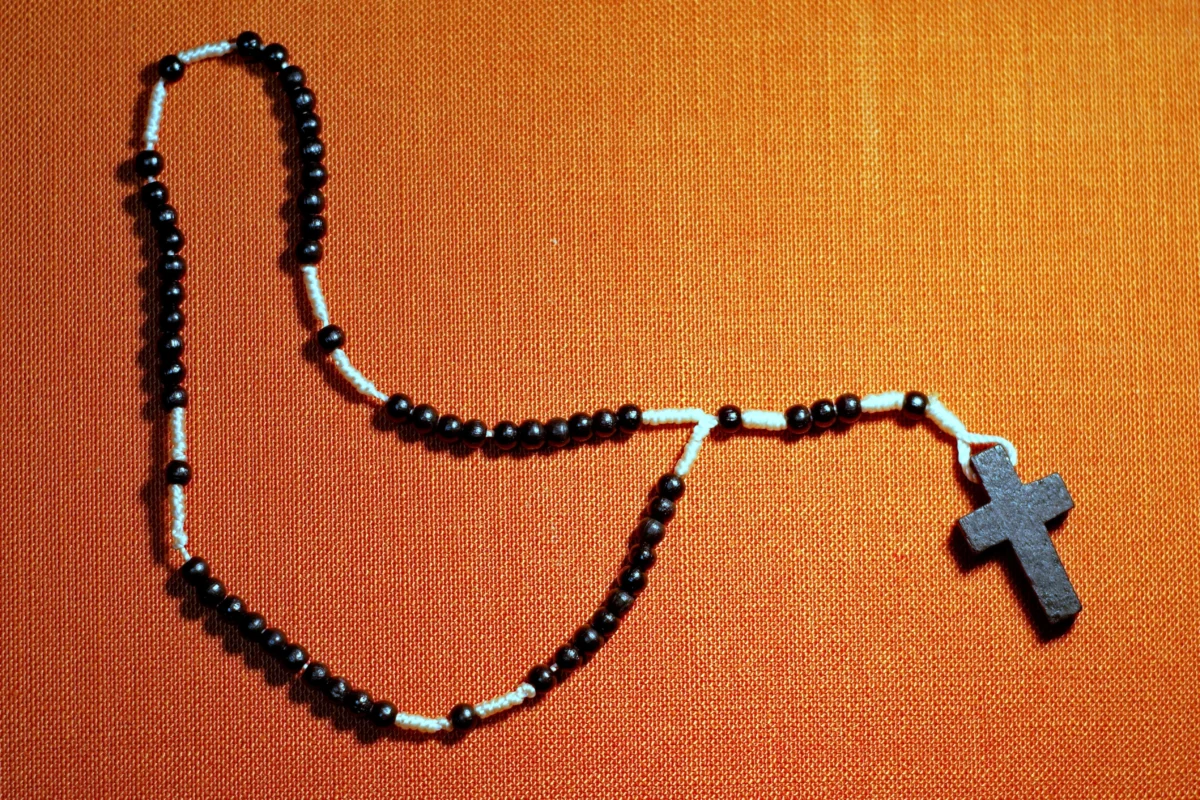
Before stringing a single bead, understanding the precise structure of the Catholic rosary is essential — because every bead has a specific theological purpose, and placing them incorrectly produces an object that cannot serve the prayer it was made for.
A standard five-decade Catholic rosary consists of exactly 59 beads organized as follows:
The pendant strand — the short section hanging from the main circle, containing:
- 1 crucifix — where the rosary begins and ends
- 1 large bead — for the Apostles’ Creed
- 3 small beads — for the opening Hail Marys
- 1 large bead — for the Our Father
- 1 centerpiece medal — connecting the pendant to the main circle
The main circle — containing:
- 5 groups of 10 small beads — the Hail Mary beads of each decade
- 5 single large beads separating each decade — the Our Father beads
Every bead in this structure corresponds to a specific prayer and a specific mystery. The physical structure of the rosary is not arbitrary — it is a precise theological map of the prayer prayed on it.
Materials Needed to Make a Rosary
The Beads
The choice of beads is the most important material decision in rosary making — because the beads are what the fingers touch during prayer, and their weight, size, and texture directly affect the quality of that tactile experience.
Pony beads — the most accessible choice for beginners and children. Available at any craft store, durable, and easy to thread on string. Their larger size makes them easy for small hands to manage during prayer.
Glass beads — heavier and more substantial than plastic, glass beads carry a quality in the hand that plastic cannot replicate. Available at craft stores and online in every color of the rosary color spectrum — from pink rosary meaning pink to red rosary meaning garnet red to blue rosary beads meaning navy blue.
Wood beads — natural wood beads carry the theological connection to the Cross that makes them particularly appropriate for rosary making. Olive wood, walnut, and other hardwoods are available from specialty bead suppliers and carry the warmth and grain that makes wood the most historically resonant rosary material.
Natural stone beads — amethyst, rose quartz, black tourmaline, and other semi-precious stones add the dimension of Catholic gemstone tradition to a homemade rosary. More expensive than glass or plastic but significantly more meaningful as devotional objects.
Bead sizes — the standard distinction between the decade beads and the Our Father beads must be maintained. Decade beads typically range from 6mm to 8mm. Our Father beads should be noticeably larger — 10mm to 12mm — so the fingers recognize them during prayer without visual confirmation.
The String or Wire
Waxed cotton thread — the most recommended material for string rosaries. The wax coating makes threading easier, the cotton provides durability, and the natural material connects the rosary to the tradition of knotted cord rosaries that stretch back to the earliest centuries of the faith. Use 1mm to 1.5mm diameter for standard sized beads.
Silk cord — softer than waxed cotton with a natural sheen that enhances the appearance of the finished rosary. Slightly more difficult to knot securely but produces a more refined result.
Nylon thread — strong, resistant to fraying, and available in colors that can complement the bead choice. Less traditional than cotton or silk but highly durable for daily use.
Beading wire — for rosaries intended to use wire links rather than string, 0.5mm craft wire or dedicated rosary wire allows the creation of loop connections between beads that more closely replicate the structure of professionally made Italian rosaries.
The Findings
The crucifix — the single most important component of a Catholic rosary. Choose a crucifix with genuine detail — the corpus of Christ recognizable as a body, the wounds present, the cross well-proportioned. Crucifixes are available from Catholic supply stores, online suppliers, and specialist rosary finding retailers. Avoid flat, featureless crosses that communicate nothing about the sacrifice they represent.
The centerpiece medal — typically bearing an image of the Virgin Mary, a specific Marian apparition, or the Sacred Heart of Jesus. The centerpiece connects the pendant strand to the main circle and anchors the Marian identity of the rosary.
Jump rings and wire — if making a wire-linked rosary, small jump rings connect the loops of adjacent beads. Standard jewelry pliers are required for opening and closing jump rings without deforming them.
How to Make a Rosary with String and Beads — Step by Step

Method 1 — The Knotted String Rosary
The knotted string rosary is the most traditional and accessible method — requiring no tools beyond scissors and the ability to tie secure knots.
Step 1 — Cut your string Cut approximately 4 feet of waxed cotton thread. This provides enough length for the full rosary with extra for comfortable handling during the process.
Step 2 — Attach the crucifix Fold the string in half to find the midpoint. Pass the folded end through the top loop of the crucifix from front to back, then pass the two loose ends through the folded loop and pull tight — creating a secure lark’s head knot that holds the crucifix firmly without requiring additional hardware.
Step 3 — String the pendant strand Working with both strands together, string beads in this order:
- 1 large bead — Apostles’ Creed
- 3 small beads — opening Hail Marys
- 1 large bead — first Our Father
- Tie a knot after the final bead to hold the pendant strand taut
Step 4 — Attach the centerpiece Pass both strands through the centerpiece medal from bottom to top. The centerpiece becomes the connection point between the pendant and the main circle.
Step 5 — String the first decade From the centerpiece, string 10 small beads — the first decade’s Hail Mary beads. Tie a knot, then string 1 large bead for the Our Father separating the first and second decade.
Step 6 — Continue through all five decades Repeat the pattern — 10 small beads, knot, 1 large bead — for each of the five decades. Maintain consistent tension throughout to keep the beads evenly spaced and the rosary able to move smoothly through the fingers during prayer.
Step 7 — Close the circle After the fifth decade, pass the remaining string back through the centerpiece from top to bottom, joining the two ends of the main circle. Tie a secure knot — a double knot reinforced with a small drop of clear nail polish pressed into the knot to prevent loosening — and trim the excess string.
Step 8 — Final check Count your beads — 50 small beads in five groups of ten, 5 large Our Father beads, 3 small beads on the pendant, and 2 large beads on the pendant. Total: 59 beads plus the crucifix and centerpiece. Every bead in its correct position means the rosary is ready for its first prayer.
Method 2 — The Wire-Linked Rosary
The wire-linked rosary more closely replicates the structure of professionally made Italian rosaries — each bead connected to its neighbors by small wire loops rather than strung on a continuous thread.
Materials required:
- Rosary wire or 0.5mm craft wire
- Round nose pliers
- Wire cutters
- All beads, crucifix, centerpiece, and jump rings as above
Step 1 — Create wire links Cut 59 individual pieces of wire approximately 3cm each. Using round nose pliers, form a small closed loop at one end of each piece of wire. Thread a bead onto the wire, then form a second closed loop at the other end. Each bead now has a loop at each end for connecting to adjacent beads.
Step 2 — Connect the decades Open the loop of one bead link, pass it through the closed loop of the adjacent bead, and close it again. Repeat for all 10 beads of the first decade — creating a linked chain of 10 connected beads.
Step 3 — Connect the Our Father beads Connect each decade chain to the next with a single large Our Father bead link — its loops connecting to the final bead of the preceding decade and the first bead of the following one.
Step 4 — Attach the centerpiece and crucifix Connect the first decade to one hole of the centerpiece and the last decade to the same hole using jump rings. Attach the pendant strand to the opposite hole of the centerpiece and the crucifix to the bottom of the pendant strand.
How to Make a Rosary with Kids
Making rosaries with children is one of the most powerful ways to transmit the rosary devotion from one generation to the next — the act of making engaging the child’s imagination and hands in a way that passive instruction cannot.
Several adaptations make rosary making accessible and enjoyable for children:
Use pony beads — their larger size is easy for small fingers to thread and count. Two different colors — one for the Hail Mary beads and one for the Our Father beads — teaches the rosary structure visually before the child knows the prayers.
Use thicker string — waxed cord of 1.5mm to 2mm diameter is easier for children to handle than fine thread, and the larger holes of pony beads accommodate it comfortably.
Make it a teaching moment — as each bead is strung, name the prayer that will be prayed on it. The Our Father bead threaded with the words “this is where we pray the prayer Jesus taught us” builds the connection between the physical object and the prayer it carries before the rosary is even finished.
Let them choose the colors — a child who chooses pink beads for their rosary because pink is their favorite color has made their first unconscious connection to the white rosary meaning and the full language of Catholic rosary color symbolism. The theological understanding comes later — the love of the object comes first.
The Honest Difference Between a Homemade Rosary and an Italian Handcrafted Rosary
A homemade rosary made with love and intention is a beautiful and valid Catholic sacramental — and the act of making it carries its own devotional significance. This is not in question.
But for the rosary that will accompany daily prayer for the next thirty years — the rosary prayed through illness, grief, gratitude, and the ordinary fidelity of a Catholic life — there is an honest difference between a rosary made at a craft table and a rosary made by craftsmen whose entire tradition has been built around producing the finest devotional objects the Church has known.
The difference is in bead weight — genuine Italian crystal beads carry a substance in the hand that pony beads and craft glass cannot approach. The difference is in the crucifix — an Italian crucifix renders the corpus of Christ with the theological detail that keeps the reality of the Passion present during prayer. The difference is in durability — Italian rosary construction is built to survive decades of daily prayer without the string weakening, the links breaking, or the finish fading.
A homemade rosary is a beautiful beginning — the first rosary a child makes and keeps, the rosary made as a gift that carries the giver’s love in its imperfect knots. An Italian natural wood rosary or authentic crystal rosary from Italy is the rosary that serves that prayer for the rest of a life.
Both have their place in a Catholic devotional life. The homemade rosary and the handcrafted Italian rosary are not competitors — they are companions, each serving the devotion in its own way and at its own moment.
Conclusion
Making a rosary by hand places the maker within one of the oldest traditions of Catholic devotional life — the hands engaged in the same act of shaping prayer beads that faithful Catholics have performed for eight centuries, from the knotted cords of medieval monks to the craft tables of Catholic families today.
Every rosary made with intention — whether strung by a child’s uncertain hands or assembled with the precision of an adult craftsman — carries within its beads the same prayer that every Catholic rosary has always carried. The mysteries of Christ’s life. The intercession of His mother. The hope that Catholic faith has always placed in both.
For the rosary made as a first devotional object, a gift, or a family craft — the homemade rosary serves beautifully. For the rosary that will serve daily Catholic prayer across decades of faithful use — our collection of handcrafted Italian rosaries is crafted to that standard — each one built for a lifetime of prayer in a way that craft materials, however lovingly assembled, cannot quite replicate.
Frequently Asked Questions
A standard five-decade Catholic rosary requires 59 beads — 53 small beads for the Hail Marys, 6 large beads for the Our Fathers, plus a crucifix and centerpiece medal. The pendant strand uses 4 of the small beads and 2 of the large ones.
Waxed cotton thread of 1mm to 1.5mm diameter is the most recommended string for rosary making — its wax coating makes threading easier, its cotton construction provides durability, and its natural material connects to the centuries-old tradition of knotted cord rosaries.
Yes — pony beads and thick waxed cord make rosary making accessible to children from age six upward with adult supervision. Using two colors of beads to distinguish the Hail Mary beads from the Our Father beads teaches the rosary structure visually while the child strings each bead.
A knotted string rosary using pony beads takes approximately 30–45 minutes for an adult working carefully. A wire-linked rosary using smaller glass beads takes 2–3 hours. Both methods become faster with practice.
Any rosary — homemade or purchased — becomes a fully empowered Catholic sacramental when blessed by a Catholic priest. A homemade rosary blessed by a priest carries the same sacramental status as any Italian rosary blessed in the same way. Bring the finished rosary to any Catholic priest for the brief blessing of rosary beads.
A knotted rosary uses continuous string with knots between beads — simpler to make, more accessible for beginners and children, and connected to the oldest rosary-making tradition. A wire-linked rosary uses individual wire loops connecting each bead — more durable, more similar in structure to professionally made rosaries, and requiring basic jewelry-making tools.