Blog
Why Do Catholics Pray the Rosary: The Complete Answer

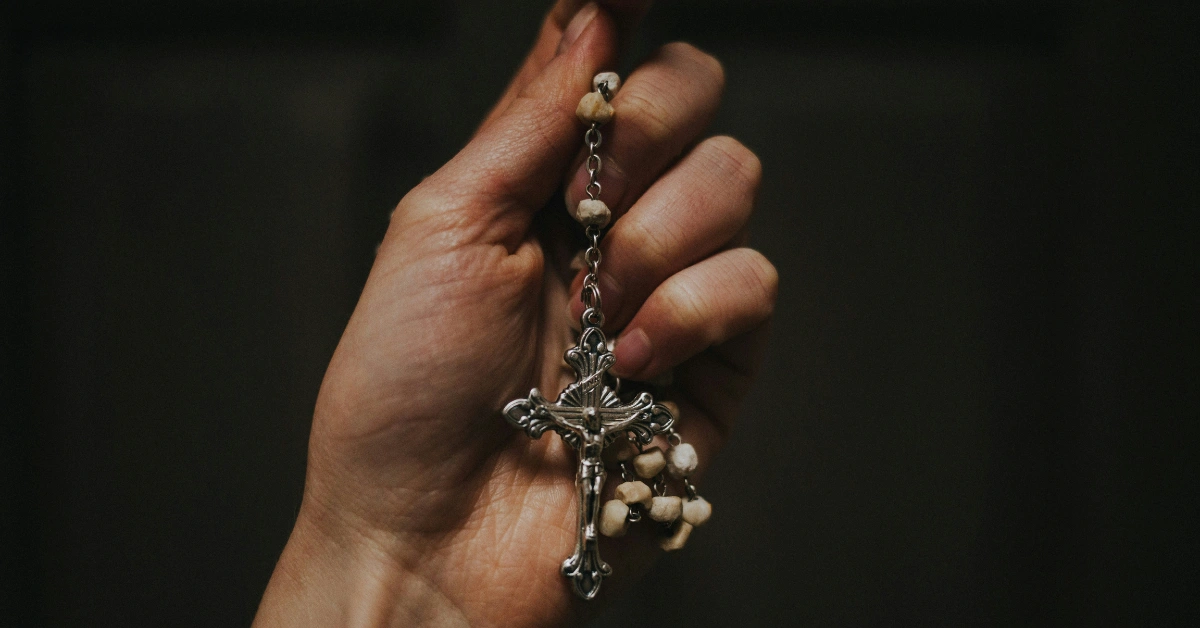
The rosary is the most misunderstood prayer in Catholic life. Non-Catholics often see it as repetitive — the same words cycling through fifty Hail Marys that seem to blur into each other without purpose or progress.
Even some Catholics who have prayed it their entire lives could not fully explain why they pray it — only that they do, that it helps, that something happens in the praying that does not happen anywhere else.
Understanding why Catholics pray the rosary requires understanding what the rosary actually is — not a counting exercise, not a superstitious ritual, not a Catholic alternative to Bible reading, but a structured meditation on the life of Jesus Christ prayed through the eyes and the intercession of His mother. Once that is understood, the question answers itself.
What Does the Rosary Symbolize in Christianity?
Before addressing why Catholics pray the rosary, its symbolism must be understood — because the rosary is not simply a prayer. It is a theological statement compressed into a physical object.
The rosary symbolizes four distinct realities simultaneously:
The life of Christ — The twenty mysteries of the rosary move through the entire arc of Christ’s earthly life — from the Annunciation of His conception to the Coronation of His mother as Queen of Heaven. To pray the full rosary is to meditate on the Gospel from beginning to end in a structured, repeatable form accessible to any Catholic regardless of literacy or theological education.
The intercession of Mary — The Hail Mary — prayed fifty times in a standard five-decade rosary — is not worship of Mary. It is the invocation of her intercession — asking the mother of Christ to pray alongside the person praying, to bring their intentions before her Son with the particular authority that a mother’s prayer carries in every culture and every era of human history.
The Church’s prayer — The rosary is never a purely private prayer. Every rosary prayed anywhere in the world enters into the vast current of Catholic prayer that the Church offers continuously — joining the intentions of the individual to the intentions of the universal Church in a communion that transcends time, space, and the limitations of individual faith.
The battle against evil — Saint Louis de Montfort, whose treatise The Secret of the Rosary remains the most comprehensive theological account of the devotion, described the rosary as a weapon — the specific instrument through which Mary’s intercession is most powerfully invoked against the spiritual forces that Catholic faith acknowledges as real and active in human history.
These four dimensions of rosary symbolism answer the basic question of what the rosary is. The question of why Catholics pray it follows directly.
10 Reasons Catholics Pray the Rosary
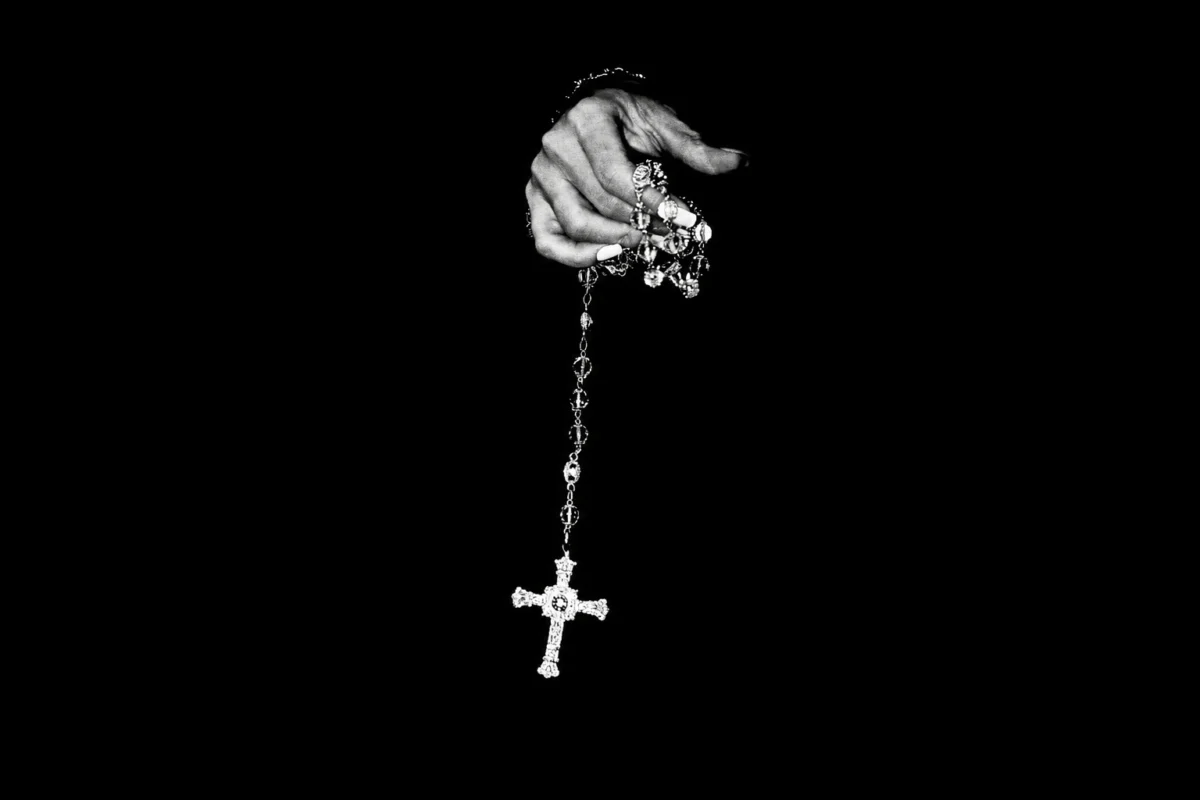
1. Because the Gospels Are Its Foundation
Every mystery of the rosary is drawn directly from the New Testament. The Annunciation from Luke 1. The Nativity from Luke 2. The Agony in the Garden from Matthew 26. The Crucifixion from all four Gospels. The Resurrection from all four Gospels. The Pentecost from Acts 2.
The rosary is not a Catholic invention placed alongside the Bible. It is a structured meditation on the Bible — a method of entering the Gospel narratives with the imagination, the intellect, and the heart simultaneously, guided by the repetition of prayers that create the interior silence necessary for genuine scriptural contemplation.
2. Because Mary Asked for It
At Fatima in 1917, the Blessed Virgin Mary appeared to three shepherd children and identified herself as “Our Lady of the Rosary.” Her request was specific and unambiguous — pray the rosary daily for world peace and the conversion of sinners.
This was not the first time Mary had specifically requested the rosary. At Lourdes in 1858, she prayed the rosary alongside Saint Bernadette during the apparitions, moving her fingers along the beads in silence while Bernadette recited the prayers aloud. The consistency of this Marian request across multiple authenticated apparitions carries significant theological weight for Catholics who believe in the reality of these events.
3. Because the Saints Prayed It
The roster of saints who prayed the rosary with extraordinary devotion reads like a summary of Catholic history — Saint Dominic, Saint Louis de Montfort, Saint John Vianney, Saint Padre Pio, Saint John Paul II, Saint Teresa of Calcutta.
Padre Pio prayed fifteen decades every day of his priestly life. John Paul II added the Luminous Mysteries in 2002 and described the rosary as “my favorite prayer.” Mother Teresa’s Missionaries of Charity begin every day with the rosary before any other activity. The pattern across centuries and across vastly different forms of Catholic life is consistent — the rosary accompanies the deepest expressions of Catholic holiness the Church has produced.
4. Because It Is a School of Contemplation
Catholic spiritual tradition distinguishes between vocal prayer — words addressed to God — and contemplative prayer — the interior silence in which the soul rests in God’s presence. The rosary uniquely combines both.
The vocal repetition of the Hail Mary creates a rhythmic current that gradually quiets the analytical mind and opens the contemplative dimension of the soul — the space where the mysteries being meditated upon can be encountered not as historical facts but as living realities. This is why the rosary is often described as accessible contemplation — the contemplative prayer of the mystics made available to any Catholic willing to sit with it long enough for the rhythm to do its work.
5. Because It Prays the Mysteries of Faith
The four sets of rosary mysteries — Joyful, Sorrowful, Glorious, and Luminous — cover the central mysteries of Catholic faith with a completeness that no other private devotion achieves. The Incarnation, the Passion, the Resurrection, the sending of the Holy Spirit, the destiny of the human person in the Assumption and Coronation — all present within the rosary’s cycle, available to be meditated upon with the depth the mystery deserves.
6. Because It Carries Indulgences
The Catholic doctrine of indulgences — the remission of temporal punishment due to sin through the merits of Christ and the saints — attaches specific indulgences to the rosary prayed under specific conditions. A plenary indulgence is attached to the rosary prayed in common with the family or in a parish setting, meeting the standard conditions of sacramental confession, Communion, and prayer for the Pope’s intentions.
This doctrinal dimension of the rosary means that praying it in the prescribed manner is not simply a personal spiritual practice — it is an act with consequences that Catholic theology regards as extending beyond the individual and into the economy of grace that governs the entire Church.
7. Because It Is a Weapon of Spiritual Warfare
Catholic faith has never been naive about the reality of evil — the personal spiritual force that the tradition identifies as the enemy of human souls and the opponent of God’s plan for history. The rosary is specifically identified in Catholic tradition as an instrument of spiritual warfare — the prayer through which Mary’s intercession is invoked against that opposition most powerfully.
The Battle of Lepanto in 1571 — in which the Christian fleet defeated the Ottoman navy against significant odds on October 7th, the feast of Our Lady of the Rosary — has been understood within Catholic tradition as a historical demonstration of the rosary’s intercessory power. Pope Pius V attributed the victory directly to the rosary being prayed across Europe during the battle.
8. Because It Sanctifies Time
The rosary prayed daily creates a rhythm of sanctified time — a fixed point in the day around which everything else is organized. Many Catholics who have prayed the rosary consistently for years describe it as the anchor of their entire spiritual life — the prayer that, if neglected, allows everything else to drift.
This sanctification of time through structured daily prayer is one of the oldest instincts of Catholic spirituality — visible in the Liturgy of the Hours prayed by monastics and clergy, accessible to the laity through the daily rosary in a form that requires neither literacy nor theological training.
9. Because It Builds Marian Consecration
For Catholics who have made the Total Consecration to Mary — through the method of Saint Louis de Montfort or the 33-day preparation of Father Michael Gaitley — the daily rosary is not optional devotional practice but the primary instrument through which the consecration is renewed and lived. The rosary prayed with this intention is an act of total surrender to Our Lady’s maternal care — each decade an offering placed in her hands to be brought before her Son.
10. Because It Works
This is the testimony of every century of Catholic experience — the rosary prayed faithfully, over time, with whatever faith the person can bring to it, produces measurable fruit in the spiritual life. Conversions. Healings. The resolution of impossible situations. The peace that surpasses understanding arriving in the middle of grief, illness, or despair.
This is not magic. Catholic theology is precise about this — the rosary works not because the words carry power in themselves but because they invoke the intercession of the most powerful intercessor the Church knows, and because God honors the prayer of His mother in ways that exceed what human calculation can predict or explain.
Why Do Catholics Pray the Rosary When Someone Dies
The Catholic response to death is not grief management. It is theological — rooted in the conviction that the soul of the deceased has passed into a state where the prayers of the living can still reach them, still accompany them, still make a difference in their journey toward God.
Catholic teaching on Purgatory — the state of final purification through which souls not fully ready for the beatific vision pass before entering heaven — gives the prayers of the living a specific and urgent purpose at the moment of death. The rosary prayed for the dead is not a farewell gesture. It is an act of intercession — asking Our Lady’s prayers for the soul that has just entered her Son’s judgment, asking mercy for whatever remains to be purified, accompanying the deceased through the threshold the living cannot yet cross.
Several specific dimensions of this tradition deserve attention:
The moment of death — Catholic tradition holds that the prayers offered at the moment of death carry particular weight — the soul at its most vulnerable, the mercy of God at its most accessible. A rosary prayed at the bedside of the dying or immediately at the moment of death places the departing soul explicitly under Our Lady’s mantle at the threshold between time and eternity.
The nine days after death — The novena rosary prayed for nine consecutive days after a Catholic’s death follows the tradition of the novena — nine days of prayer modeled on the nine days between the Ascension and Pentecost when the Apostles and Mary prayed together in the upper room. Nine days of rosary prayer for the deceased is one of the most ancient and widespread Catholic responses to death in the community of faith.
The month of November — The entire month of November is dedicated in the Catholic calendar to prayer for the souls of the dead — the Poor Souls in Purgatory. The rosary prayed daily throughout November for the deceased is a practice encouraged by the Church and accompanied by specific indulgences applicable to the souls being prayed for.
A black crystal rosary is often the natural choice for this dimension of rosary prayer — its color carrying the Catholic symbolism of mourning and intercession for the dead that makes it the most theologically precise instrument for praying the rosary when someone dies.
Why Do Catholics Pray the Rosary for 9 Days
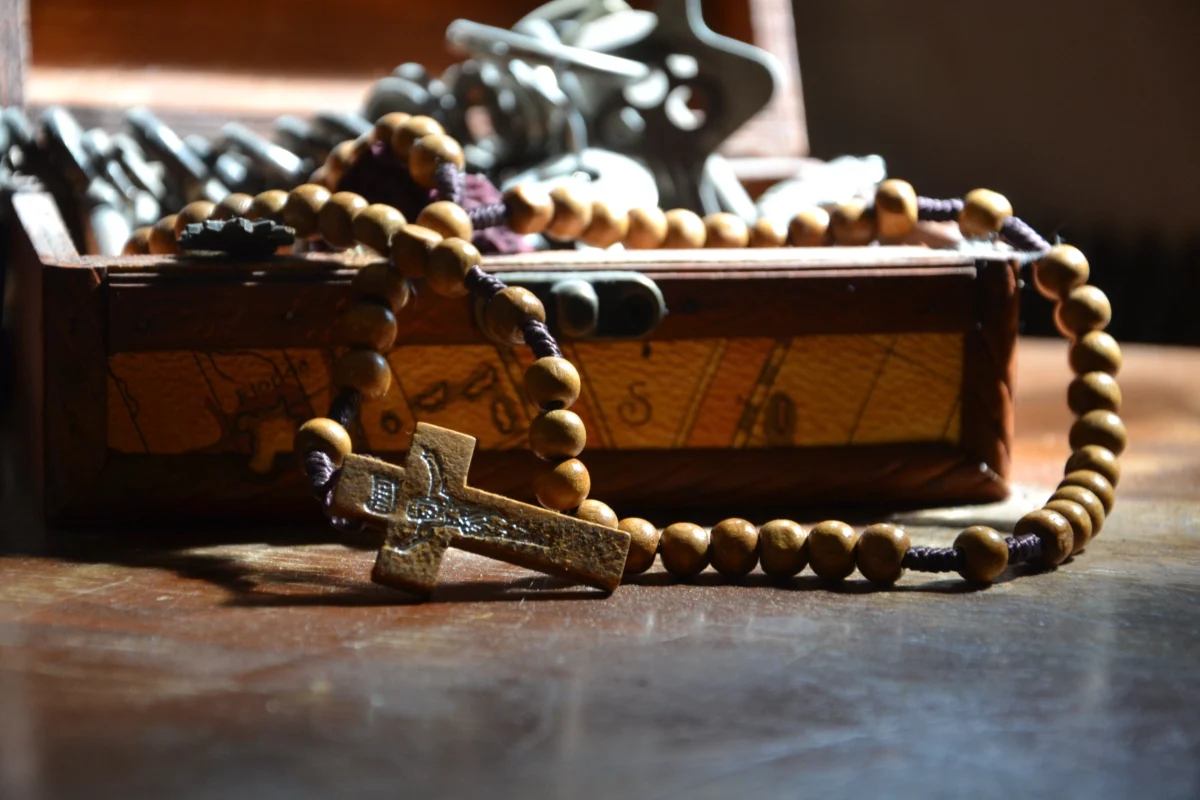
The nine-day rosary — prayed for nine consecutive days for a specific intention — follows the structure of the Catholic novena, one of the oldest forms of sustained intercessory prayer in the tradition.
The theological foundation of the novena is the nine days the Apostles and Mary spent in prayer between the Ascension of Christ and Pentecost — the nine days that ended with the descent of the Holy Spirit and the birth of the Church. Nine days of sustained prayer, prayed in community, in obedience to Christ’s instruction to wait, produced the most transformative event in Christian history after the Resurrection itself.
A nine-day rosary for a specific intention — the death of a loved one, a serious illness, a family in crisis, a situation beyond human resolution — carries that apostolic precedent into the present moment. It is not a magical formula but a sustained act of faith — the commitment to bring the same intention before God through Mary’s intercession for nine consecutive days expressing the seriousness and persistence that the Gospel commends in prayer.
Why Do Catholics Pray the Rosary for Kids
Children encounter the rosary differently from adults — and the rosary, rightly understood and rightly taught, is one of the most accessible forms of Catholic prayer for children precisely because it engages the body and the imagination rather than relying on abstract theological understanding.
The physical beads give children something to hold and to count — making the progress of the prayer visible and tactile in a way that purely interior prayer is not. The mysteries, told as stories from the life of Jesus and Mary, engage the imagination in a way that catechism questions and answers do not. The repetition of the Hail Mary, learned early and repeated often, becomes the prayer that rises automatically in moments of fear, grief, or need — the prayer that is simply there, in the body and the memory, available without effort when effort is impossible.
Teaching children to pray the rosary is one of the most durable gifts a Catholic parent or grandparent can give — placing in the child’s hands a prayer that will accompany them through every stage of life, available in every circumstance, requiring nothing beyond the faith they can bring to it in that moment.
A white crystal rosary or Italian white wood rosary is the most natural first rosary for a child — its color carrying the purity and new life of Catholic faith at its beginning, its beads substantial enough to be felt and counted during prayer.
Conclusion
Catholics pray the rosary because it works — in the deepest sense of that word.
Not as a mechanical operation that produces guaranteed outcomes, but as a prayer that, prayed faithfully over time, draws the soul into the mysteries of Christ’s life with a depth and consistency that no other private devotion quite achieves. It works because it is rooted in the Gospel. It works because it invokes the most powerful intercessor the Church knows. It works because ten centuries of Catholic saints have prayed it and found in it the anchor of their entire spiritual life.
The rosary prayed when someone dies works because death is not the end Catholic faith proclaims it to be — and the prayers of the living can still reach the dead. The rosary prayed for nine days works because sustained prayer, brought before God through Mary’s intercession, is precisely the kind of prayer the Gospel commends. The rosary taught to children works because the beads in a child’s hands plant a prayer that will grow with them for the rest of their life.
Frequently Asked Questions
Catholics pray the rosary as a structured meditation on the life of Christ through the intercession of the Virgin Mary. Its twenty mysteries cover the central events of the Gospel — the Incarnation, Passion, and Resurrection — making it the most comprehensive private prayer devotion in Catholic tradition.
The rosary prayed at death is an act of intercession for the soul that has just passed — invoking Our Lady’s prayers for the deceased at the most critical moment of their journey toward God. Catholic teaching on Purgatory gives this prayer a specific and urgent theological purpose beyond simple mourning.
A nine-day rosary follows the novena tradition — modeled on the nine days the Apostles and Mary prayed between the Ascension and Pentecost. Nine consecutive days of sustained rosary prayer for a specific intention expresses the persistence and seriousness that Catholic tradition commends in intercessory prayer.
The rosary symbolizes the life of Christ meditated through Mary’s intercession, the Church’s continuous prayer, and the spiritual warfare of Catholic faith against evil. Its beads count the Hail Marys of each decade while the mysteries give each decade its specific meditative content drawn directly from the New Testament.
The rosary is among the most accessible Catholic prayers for children because its physical beads engage the body, its mysteries engage the imagination, and its repetition builds the prayer into memory — making it available automatically in every circumstance of life without requiring theological sophistication.
The rosary as a structured devotion is not explicitly in the Bible — but every mystery it meditates on is drawn directly from the New Testament. The prayers it uses — the Our Father from Matthew 6, the Hail Mary from Luke 1 — are biblical. The rosary is a biblical meditation structured through Catholic tradition.