Blog
Rosary vs Chaplet: The Difference Every Catholic Should Understand

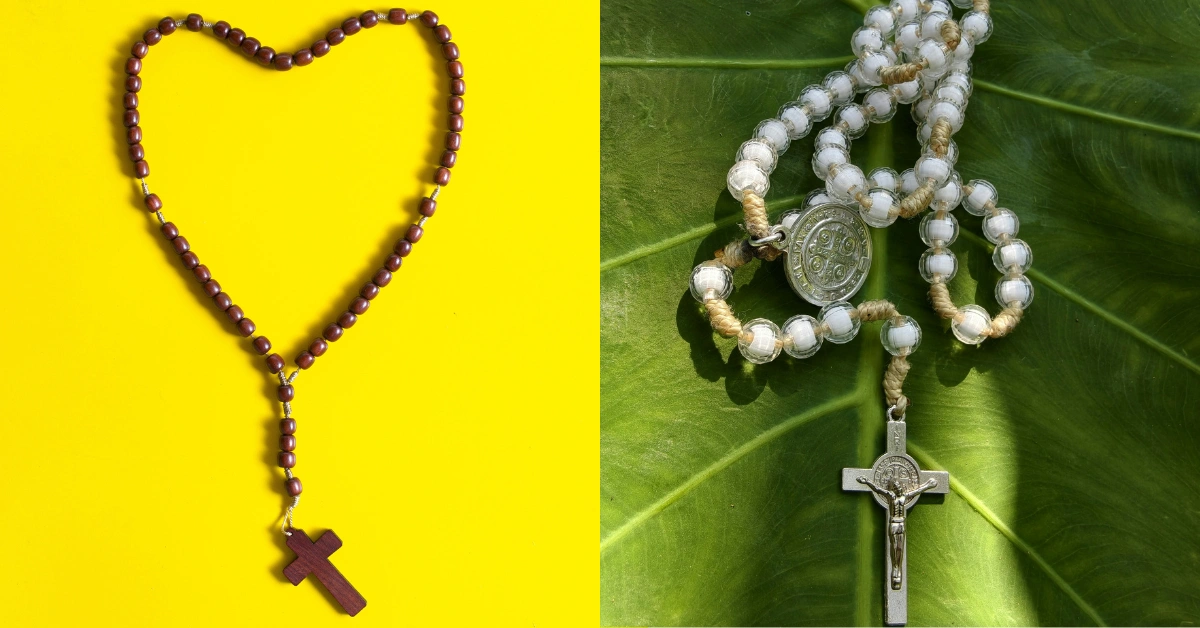
They share the same beads. They do not share the same prayer. The confusion between a rosary and a chaplet is one of the most common misunderstandings in Catholic devotional life — not because Catholics are uninformed but because the two objects are physically identical.
The same string of beads, the same crucifix, the same structure of large and small beads that the fingers navigate during prayer. What separates them is not the object itself but the prayer prayed on it — and understanding that distinction opens an entire world of Catholic devotional tradition that most Catholics have never fully explored.
What Are Catholic Prayer Beads Called?
Catholic prayer beads carry different names depending on their specific devotional purpose — and the names matter because they reflect the specific prayer tradition each object belongs to.
The Rosary is the most widely known Catholic prayer bead devotion — a structured meditation on the mysteries of Christ’s life and Mary’s role within them, organized into five decades of ten Hail Marys each, preceded by an Our Father and followed by a Glory Be. The word rosary comes from the Latin rosarium — rose garden — reflecting the ancient association between the prayers of the rosary and the offering of roses to the Virgin Mary.
The Chaplet is a broader category — any structured Catholic prayer prayed on beads that is not the full Marian rosary. The word chaplet comes from the Old French chapelet — a little wreath or garland — and was applied to shortened or modified bead prayers that developed alongside the rosary tradition. The most widely known chaplet in the modern Catholic world is the Chaplet of Divine Mercy — revealed to Saint Faustina Kowalska in 1935 and now prayed by Catholics on every continent.
The Decade Rosary is a shortened form of the full rosary — a single decade of ten Hail Marys on a small circular or straight bead arrangement — used for quick devotional prayer when time does not allow the full five decades.
Understanding what Catholic prayer beads are called begins with understanding that the beads themselves are instruments — the prayer gives them their specific identity and devotional character.
What Are Rosary Beads For?
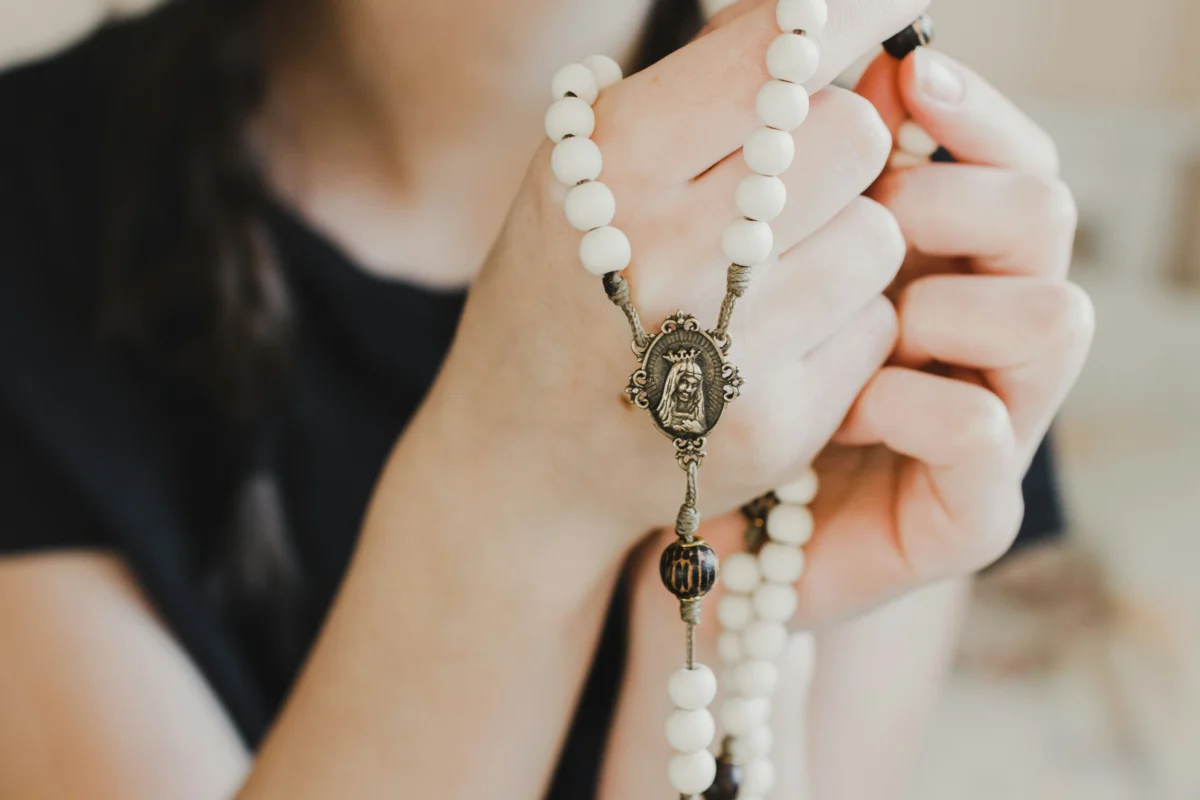
Rosary beads serve a specific and irreplaceable function in Catholic prayer — they free the mind from the work of counting.
The structure of the rosary requires the repetition of specific prayers — ten Hail Marys per decade, five decades per set of mysteries, the Our Father and Glory Be at the transition points between decades. Without the beads, the person praying must divide their mental attention between counting and praying — a division that works directly against the contemplative dimension of the rosary, which requires the mind to be free for meditation on the mysteries rather than occupied with arithmetic.
The beads solve this problem completely. The fingers count. The mind meditates. The lips pray. Three faculties of the human person — touch, intellect, and voice — engaged simultaneously in a single act of prayer that the Catholic tradition has always understood as uniquely suited to the limitations and capacities of embodied human beings.
Saint Louis de Montfort described the beads as the anchor that holds the soul in prayer when distraction threatens to pull it away. The physical sensation of the bead passing through the fingers at the end of each Hail Mary is a gentle, constant call back to attention — the body serving the spirit in the way Catholic theology has always understood the body to serve.
An authentic rosary crafted with beads of genuine weight and quality serves this function more effectively than a lightweight alternative. The bead must be felt to do its work.
The Rosary — Structure, History, and Devotional Character
The Structure of the Full Rosary
The full Catholic rosary consists of twenty mysteries divided into four sets — the Joyful, Sorrowful, Glorious, and Luminous — each set containing five mysteries prayed on five decades of ten Hail Marys. A complete rosary of all twenty mysteries requires four separate prayer sessions. The traditional practice of praying one set of five mysteries per day means the complete cycle is completed over four days.
The physical structure of a full rosary reflects this organization precisely — five groups of ten small beads separated by single larger beads, attached to a shorter strand containing the introductory prayers, and concluding with a crucifix. Every element of the physical object corresponds to a specific moment in the prayer structure.
The History of the Rosary
The rosary in its current form developed gradually through the medieval period — growing from the practice of early Christian monks who prayed one hundred fifty Psalms and later substituted one hundred fifty repetitions of the Our Father or Hail Mary for lay people unable to read the Psalter.
The Dominican Order — founded by Saint Dominic in the thirteenth century — became the primary promoters of the Marian rosary as it is now prayed. The Luminous Mysteries were added by Pope John Paul II in 2002, bringing the full rosary to its current twenty mysteries and completing the theological scope of the devotion.
Understanding the Rosary as Meditation
The rosary is frequently misunderstood — even by Catholics — as a repetitive vocal prayer whose value lies in the number of Hail Marys recited. This misunderstanding reduces it to a counting exercise and misses its entire devotional character.
The repetition of the Hail Mary is not the prayer. It is the vehicle — the rhythmic verbal current that carries the mind into meditation on the mystery announced at the beginning of each decade. The words of the Hail Mary, familiar enough to require no conscious attention, create a kind of verbal silence within which the imagination and intellect engage with the mystery at whatever depth the person praying is capable of in that moment.
This is why understanding the rosary as a meditative rather than merely vocal prayer transforms the experience of praying it entirely. The pink rosary meaning, the red rosary meaning, the blue rosary beads meaning — every color dimension of the rosary deepens specifically because the rosary is a meditative prayer, not a recitation.
The Chaplet — What Makes It Different
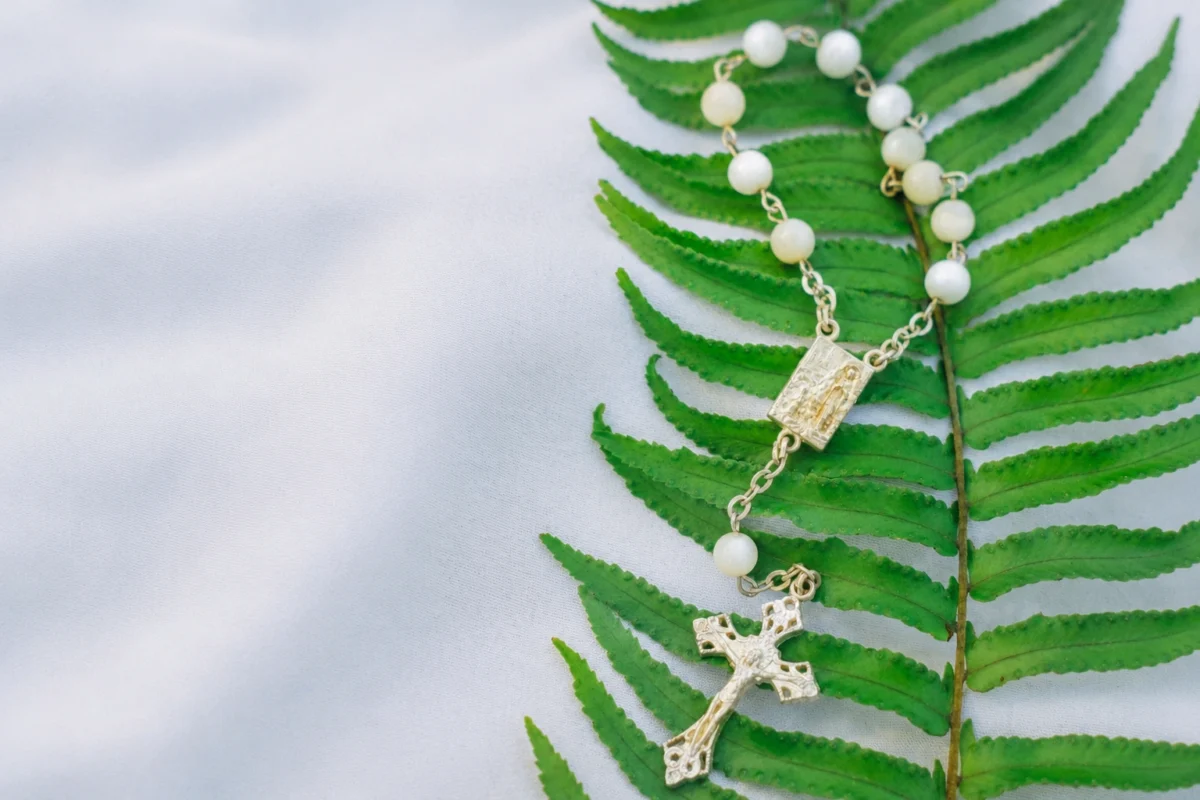
A chaplet shares the physical instrument of the rosary — the beads, the crucifix, the structure of larger and smaller beads — but replaces the Marian mysteries and the Hail Mary with a different set of prayers directed toward a specific devotional focus.
The chaplet is therefore not a shortened or simplified rosary. It is a distinct prayer that happens to use the same physical instrument. Understanding this distinction matters because it reveals how extraordinarily versatile the rosary beads are as a prayer instrument — capable of carrying not one but dozens of distinct Catholic devotional traditions on the same physical structure.
The Chaplet of Divine Mercy
The most widely prayed chaplet in the contemporary Catholic world was revealed by Christ to Saint Faustina Kowalska in 1935 — the same saint whose relics are carried in the Saint Faustina relic rosary in our collection.
The Chaplet of Divine Mercy is prayed on standard rosary beads — the Our Father beads carrying the prayer “Eternal Father, I offer You the Body and Blood, Soul and Divinity of Your dearly beloved Son, Our Lord Jesus Christ, in atonement for our sins and those of the whole world.” The Hail Mary beads carry “For the sake of His sorrowful Passion, have mercy on us and on the whole world.”
Christ promised Saint Faustina that this chaplet prayed at the bedside of the dying would obtain the grace of a final conversion — a promise that has made it one of the most urgently prayed prayers in the Catholic tradition.
The Chaplet of Saint Michael
The Chaplet of Saint Michael consists of nine salutations to the nine choirs of angels, each followed by one Our Father and three Hail Marys. It is prayed on a specific bead arrangement different from the standard rosary but uses the same fundamental structure of large and small beads.
Other Notable Chaplets
The Catholic tradition contains dozens of chaplets — to the Sacred Heart of Jesus, to the Holy Spirit, to specific saints whose devotional charisms have generated their own structured bead prayers. Each carries a completely distinct prayer and devotional focus on the same physical instrument of beads and crucifix.
The Core Distinction — Rosary vs Chaplet
The single most important distinction is this:
The rosary is a Marian prayer centered on meditation of the mysteries of Christ’s life. Its prayers are directed to the Virgin Mary as intercessor, and its meditations move through the Incarnation, Passion, and Resurrection of Christ through Mary’s eyes and from within her experience of those events.
A chaplet is a structured bead prayer centered on a specific devotion, saint, or theological reality that is not the full Marian rosary. Its prayers are determined by its specific devotional focus — the Divine Mercy chaplet directed toward Christ’s merciful love, the Saint Michael chaplet toward the angelic protector of the Church.
Both are legitimate and powerful instruments of Catholic prayer. Both use the same physical beads. The authentic rosary serves both traditions with equal integrity — its structure precise enough to support the full rosary and versatile enough to carry any chaplet prayed on its beads.
Choosing an Authentic Rosary for Both Devotions
Because the same beads serve as the physical instrument for both the full Marian rosary and chaplets including the Chaplet of Divine Mercy, choosing a rosary of genuine quality serves both devotional traditions simultaneously.
An Italian natural wood rosary crafted with the precision of the Italian artisan tradition — its beads substantial in the hand, its crucifix detailed and reverent — serves with equal integrity as an instrument for the full rosary and for the Chaplet of Divine Mercy.
The quality of the instrument matters because it serves the prayer. A poorly made rosary with beads too light to be felt or links too weak to survive daily use fails the prayer it is meant to support before the first decade is complete.
Browse our complete collection of handcrafted catholic rosaries — each one built for the full demands of daily Catholic prayer in every tradition the beads were made to serve.
Conclusion
The rosary and the chaplet share their beads the way two languages share an alphabet — the same letters, completely different meaning. Understanding the difference between them does not diminish either. It reveals the extraordinary richness of a Catholic devotional tradition that has found in the simple structure of beads strung on a cord an instrument capable of carrying dozens of distinct prayers across centuries of unbroken use.
The authentic rosary — crafted with the quality its devotional purpose demands — is the instrument that makes both traditions possible. Every bead a prayer. Every prayer a communion. Every decade a step deeper into the mysteries the rosary has always existed to carry the soul toward.
Our collection of Italian rosaries is built for exactly that purpose — crafted for the full demands of daily Catholic prayer in every tradition the beads were made to serve.
Frequently Asked Questions
The rosary is a Marian prayer meditating on Christ’s mysteries through five decades of Hail Marys. A chaplet uses identical beads but carries a different prayer — the Divine Mercy chaplet being the most widely prayed example today.
Catholic prayer beads are called a rosary when used for the full Marian devotion and a chaplet when carrying any other structured bead prayer. The physical object is identical — the prayer determines the name.
Rosary beads free the mind from counting so the intellect can meditate on the mysteries while the lips pray. The bead passing through the fingers at each Hail Mary keeps attention anchored without requiring conscious effort.
Yes — standard rosary beads serve as the instrument for both the full Marian rosary and chaplets including the Chaplet of Divine Mercy. The prayer prayed on them determines which devotion is being offered.
Authentic rosaries carry genuine weight in the beads, precision in the crucifix, and durable links between the decades — qualities that directly support the quality of prayer in a way lightweight alternatives cannot achieve.
A full five-decade rosary contains fifty-nine beads — fifty small beads for the Hail Marys, six larger beads for the Our Fathers, and three additional small beads on the introductory strand, completed by the crucifix and centerpiece medal.