
Blog
3rd Class Relic Rosary: Meaning, Use, and the Catholic Tradition Behind Sacred Relics

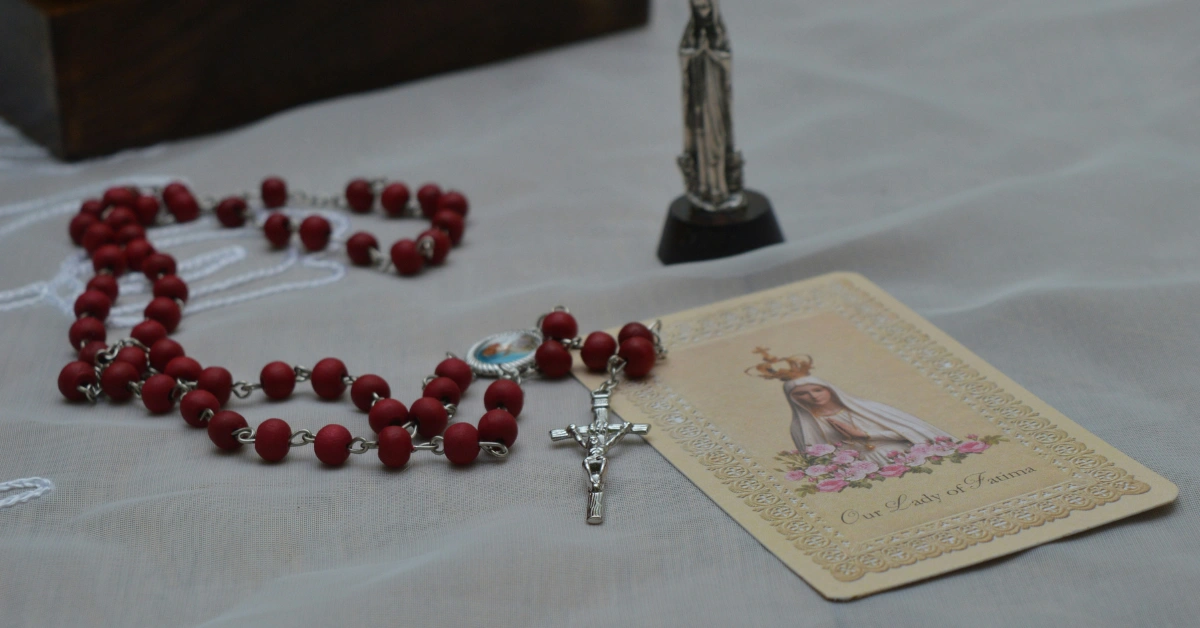
A relic is not a superstition. It is a theology. The Catholic veneration of relics rests on one of the most ancient and carefully reasoned convictions of the faith — that the bodies of the saints, having been temples of the Holy Spirit during life and destined for resurrection at the end of time, retain a sacred dignity after death that the Church honors, venerates, and draws upon through the intercession of those saints in glory.
A 3rd class relic rosary carries that entire conviction in a single devotional object — the prayer of the rosary joined to the physical connection with a soul the Church has declared to be in the presence of God.
Understanding what a relic rosary is, what the three classes of relics mean, and how to use a relic rosary in Catholic devotional life transforms it from a curiosity into one of the most powerful instruments of prayer available to the faithful.
What Is a Relic in Catholic Tradition?
Catholic theology defines a relic as a physical object connected to a saint or to Christ Himself that the Church preserves and venerates because of its sacred associations with a holy person whose soul is now in heaven.
The theological foundation for relic veneration is not medieval superstition but apostolic tradition. The Acts of the Apostles records that handkerchiefs and aprons that had touched Saint Paul’s body were brought to the sick, and their diseases left them. The bones of the prophet Elisha restored a dead man to life when his body touched them. The hem of Christ’s garment healed a woman of twelve years of hemorrhage.
The Church has never taught that relics possess power in themselves. The power belongs entirely to God — the relic functions as a point of contact, a physical connection to a saint whose intercession before God the faithful invoke, and through whose prayers God chooses to work. The Second Council of Nicaea in 787 AD formally defined the veneration of relics as a legitimate and ancient practice of the Catholic Church — not an innovation but a preservation of what the apostolic community had always understood.
The Three Classes of Relics — What They Mean
Catholic tradition divides relics into three distinct classes — a classification that has been consistent in Church practice since the medieval period and remains the standard framework for understanding relic veneration today.
First Class Relics
A first class relic is a part of the physical body of a saint — bone, hair, flesh, or blood. These are the most sacred category of relic, governed by strict canonical regulations regarding their preservation, authentication, and veneration. First class relics require formal documentation — a sealed certificate of authenticity issued by the relevant diocesan authority — and their transfer between parties is regulated by canon law.
Second Class Relics
A second class relic is an object that belonged to a saint during their lifetime — clothing, a book they used, a tool of their trade or their religious life. The personal possession of a saint carries the association of their physical presence — the object touched by hands that were themselves instruments of holiness.
Third Class Relics
A third class relic is an object that has been touched to a first or second class relic of a saint. The theological principle behind third class relics is the same that underlies the entire relic tradition — physical contact with sanctity leaves a trace that faith recognizes and venerates. A rosary touched to the tomb of Padre Pio, to a first class relic of Saint Faustina, or to any authenticated relic of a canonized saint becomes a third class relic — and a powerful instrument of Marian and saintly intercession in the devotional life of the person who prays with it.
What Is a 3rd Class Relic Rosary?
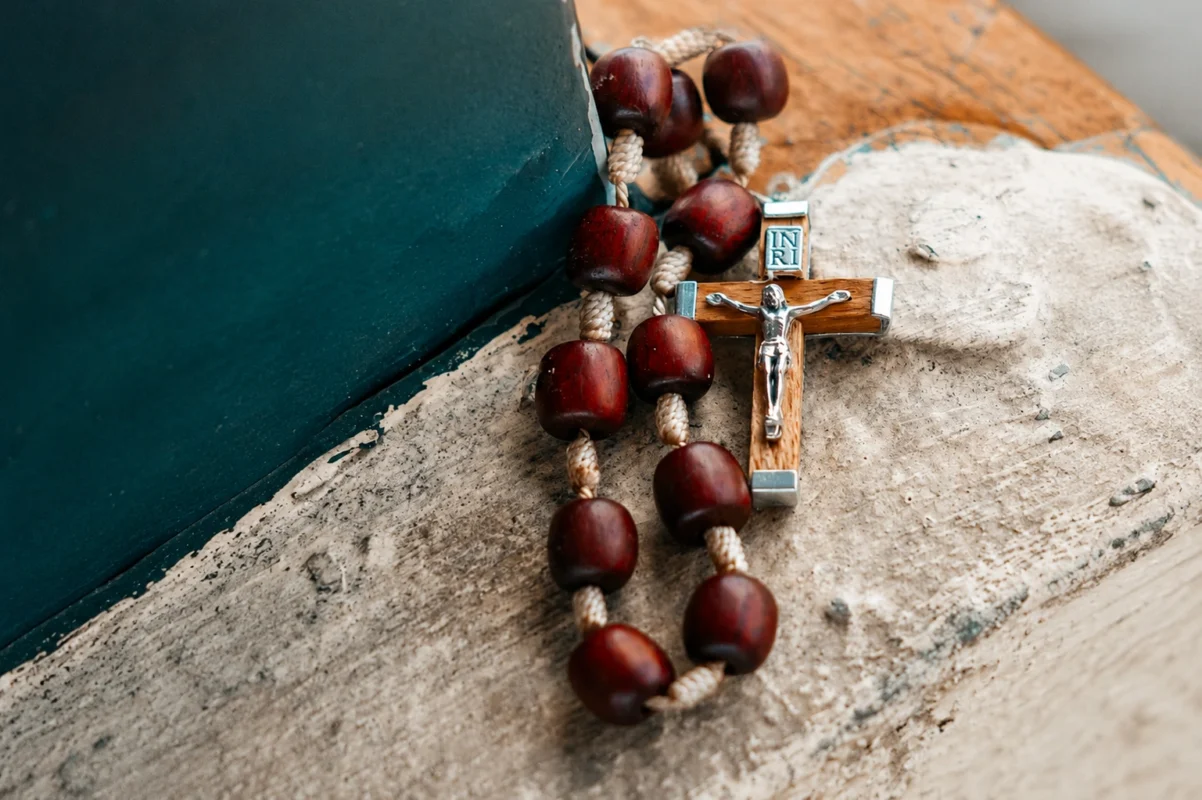
A 3rd class relic rosary is a rosary that has been physically touched to a first or second class relic of a canonized Catholic saint — most commonly at the saint’s tomb, shrine, or through direct contact with an authenticated relic during a formal blessing.
The relic rosary is not simply a blessed rosary. Every rosary blessed by a Catholic priest is a sacramental — empowered through the Church’s prayer for the spiritual benefit of the person using it. A relic rosary carries an additional dimension — the physical connection to a specific saint whose particular charism, intercession, and spiritual identity now accompany the rosary into the prayer life of whoever holds it.
Choosing a 3rd class relic rosary is therefore a devotional act of precision — selecting not only a prayer instrument but a specific intercessor. The Padre Pio relic rosary brings the intercession of the stigmatic Capuchin friar whose entire life was built on the rosary into the hands of the person praying. The Saint Faustina relic rosary brings the apostle of Divine Mercy — whose visions of Christ produced the Chaplet of Divine Mercy and the image of the Merciful Jesus — into direct devotional connection with the soul seeking mercy.
Padre Pio Relic Rosary — The Saint Who Never Put Down His Beads
Of all the saints whose relics are carried into rosary devotion, Saint Padre Pio of Pietrelcina holds the most direct connection to the rosary itself.
Born Francesco Forgione in 1887 in the small Italian village of Pietrelcina, Padre Pio entered the Capuchin Franciscan Order and was ordained a priest in 1910. In 1918 he received the stigmata — the wounds of Christ’s Passion — which he bore for fifty years until his death in 1968. He was canonized by Pope John Paul II in 2002.
Padre Pio’s relationship with the rosary was not devotional in the ordinary sense. It was total. He described the rosary as his weapon, his comfort, and his constant companion. He prayed fifteen decades of the rosary every single day — often multiple times — and was rarely seen without his beads in his hands. When asked what the rosary meant to him, he replied simply: “It is my weapon.”
He reportedly said: “The rosary is the weapon for these times.” Not a weapon among many but the weapon — the specific instrument of Marian intercession that he identified as the primary response to the spiritual crisis of the modern world.
A Padre Pio relic rosary touched to his relics carries that conviction into the hands of the person who prays it — the intercession of a saint for whom the rosary was not a devotional practice but a way of life joining the prayer of the person holding it.
Padre Pio and the Rosary — What His Example Teaches
Padre Pio’s rosary devotion was inseparable from his mystical life — his participation in the sufferings of Christ, his extraordinary gift of reading souls in the confessional, his intercessory power that drew hundreds of thousands of pilgrims to San Giovanni Rotondo during his lifetime and continues to draw millions to his shrine after his death.
Those who pray the rosary with a Padre Pio relic rosary enter into that tradition — not claiming his extraordinary charisms but invoking his intercession, asking the saint who prayed fifteen decades a day to pray alongside them through their own five.
St Faustina Relic Rosary — The Apostle of Divine Mercy
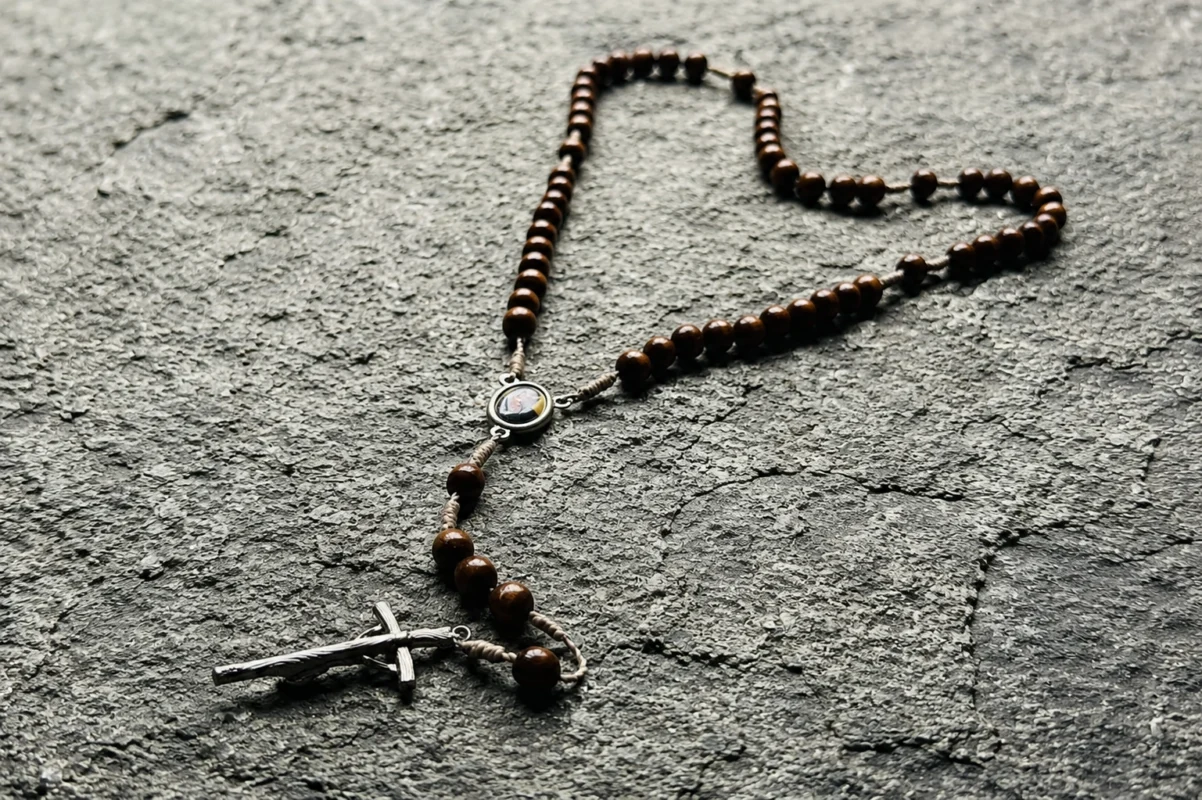
Saint Faustina Kowalska — born Helena Kowalska in 1905 in Łódź, Poland — entered the Congregation of the Sisters of Our Lady of Mercy and received a series of visions of Jesus Christ beginning in 1931 that produced three of the most significant contributions to twentieth century Catholic devotional life: the image of the Merciful Jesus, the Chaplet of Divine Mercy, and the Diary of Saint Faustina, one of the most widely read works of Catholic mystical literature of the modern era.
She died of tuberculosis in 1938 at the age of thirty-three and was canonized by Pope John Paul II in 2000 — the same pope who established the Feast of Divine Mercy on the Sunday after Easter for the universal Church.
The message Christ entrusted to Saint Faustina centered on one reality above all others — the infinite mercy of God available to every soul that turns to Him with trust. “The greater the sinner,” Christ told her, “the greater the right he has to My mercy.” This message, carried through her Diary and through the devotions she transmitted, has reached hundreds of millions of Catholics worldwide.
A Saint Faustina relic rosary touched to her relics carries that message of mercy into the rosary prayer of whoever holds it — the apostle of Divine Mercy interceding alongside the person praying, her particular charism of mercy accompanying every decade.
The Rosary and Divine Mercy — The Connection
The rosary and the Chaplet of Divine Mercy share the same beads — the chaplet is prayed on a standard rosary, using the Our Father beads and Hail Mary beads with specific Divine Mercy prayers substituted. This means a Saint Faustina relic rosary serves double devotional duty — as an instrument for both the rosary and the Chaplet of Divine Mercy, the two great Marian and mercy prayers of the Catholic tradition joined in a single object.
Blessed Rosaries for Sale — Understanding Authenticity
The market for religious goods includes objects described as relic rosaries that carry no genuine connection to authentic relics. Understanding what constitutes an authentic relic rosary protects the devotional integrity of the person seeking one.
An authentic 3rd class relic rosary carries documentation — either a certificate of authenticity indicating the specific relic to which the rosary was touched, or a traceable provenance connecting the rosary to a verified shrine or relic. Sanctum Veritas sources every relic rosary in our collection through verified channels with direct connections to authenticated relics — ensuring that every relic rosary bearing a saint’s name carries a genuine devotional connection to that saint.
The distinction between a blessed rosary and a relic rosary matters for devotional purposes. A blessed rosary — any rosary blessed by a Catholic priest — is a fully empowered sacramental whose spiritual value the Church affirms completely. A relic rosary carries the additional dimension of connection to a specific saint — not superior in theological category but specific in devotional character.
Both are legitimate instruments of Catholic prayer. The choice between them is a question of devotional intention — the relic rosary chosen by those who wish to pray in specific union with a particular saint’s intercession.
How to Use a 3rd Class Relic Rosary
A relic rosary is used in precisely the same way as any other Catholic rosary — the prayers, the mysteries, and the structure of the devotion are identical. The relic dimension does not change the prayer. It changes the communion within which the prayer is offered.
Praying a Padre Pio relic rosary with attention to his intercession means:
- Invoking his specific prayers at the beginning of the rosary — asking him to pray the mysteries alongside you
- Offering each decade for an intention connected to his particular charism — healing, conversion, the souls in purgatory, priestly holiness
- Concluding with a direct prayer to him — not worship but the same filial confidence with which one asks a holy friend to pray
Praying a Saint Faustina relic rosary with attention to her message means:
- Approaching the rosary as an act of trust in divine mercy — the theological virtue she spent her life teaching
- Using the same beads for the Chaplet of Divine Mercy at the conclusion of the rosary — the two devotions flowing naturally into each other
- Offering the rosary specifically for those in greatest need of mercy — the dying, the hardened sinner, the soul in despair
Our complete collection of handcrafted catholic rosaries includes both relic rosaries and blessed rosaries — each one sourced and crafted with the devotional integrity that Catholic prayer demands.
Conclusion
A 3rd class relic rosary is not a collector’s item. It is not a lucky charm dressed in Catholic language.
It is a prayer instrument that carries within it a specific bond — the physical connection to a saint whose holiness the Church has verified, whose intercession before God the faith affirms, and whose particular charism now accompanies every rosary prayed on those beads. Padre Pio’s weapon placed in the hands of those who need a weapon. Saint Faustina’s mercy placed in the hands of those who need mercy.
The rosary has always been a prayer of communion — with the mysteries of Christ’s life, with the intercession of Our Lady, with the vast company of the faithful who have prayed the same decades before the same mysteries throughout the centuries. A relic rosary deepens that communion by one specific, named, verified saint — whose prayers join yours from the moment the first bead passes through your fingers.
Our Padre Pio relic rosary and Saint Faustina relic rosary are sourced and crafted for those who understand that communion — and want to pray from within it.
Frequently Asked Questions
A rosary physically touched to a first or second class relic of a canonized Catholic saint. The contact connects the rosary to the saint’s specific intercession — making it both a prayer instrument and a devotional bond with a soul the Church has declared to be in heaven.
An authentic Padre Pio relic rosary carries traceable provenance — documentation connecting the rosary to a verified relic of the saint. Sanctum Veritas sources every Padre Pio relic rosary through verified channels with direct connections to authenticated relics of the saint.
A blessed rosary is empowered through the Church’s formal prayer — a fully valid sacramental for any Catholic. A relic rosary carries the additional connection to a specific saint’s intercession. Both are legitimate prayer instruments — the relic rosary chosen for its specific devotional bond with a particular saint.
A relic of Saint Faustina connects the holder to the apostle of Divine Mercy — the saint whose visions produced the Chaplet of Divine Mercy and whose message of God’s infinite mercy has reached hundreds of millions of Catholics worldwide. A Saint Faustina relic rosary serves as both a rosary and a chaplet instrument.
Yes — a Saint Faustina relic rosary is particularly suited to both the rosary and the Chaplet of Divine Mercy, since the chaplet is prayed on standard rosary beads. Both devotions flow naturally from the same instrument.
Sanctum Veritas sources every relic rosary and blessed rosary through verified suppliers with direct connections to authenticated relics and Italian artisan craftsmanship. Browse our complete collection of verified relic rosaries and blessed rosaries in our Catholic rosary collection.