
Blog
Rosaries from Italy: The Authentic Catholic Craftsmanship Behind Every Bead

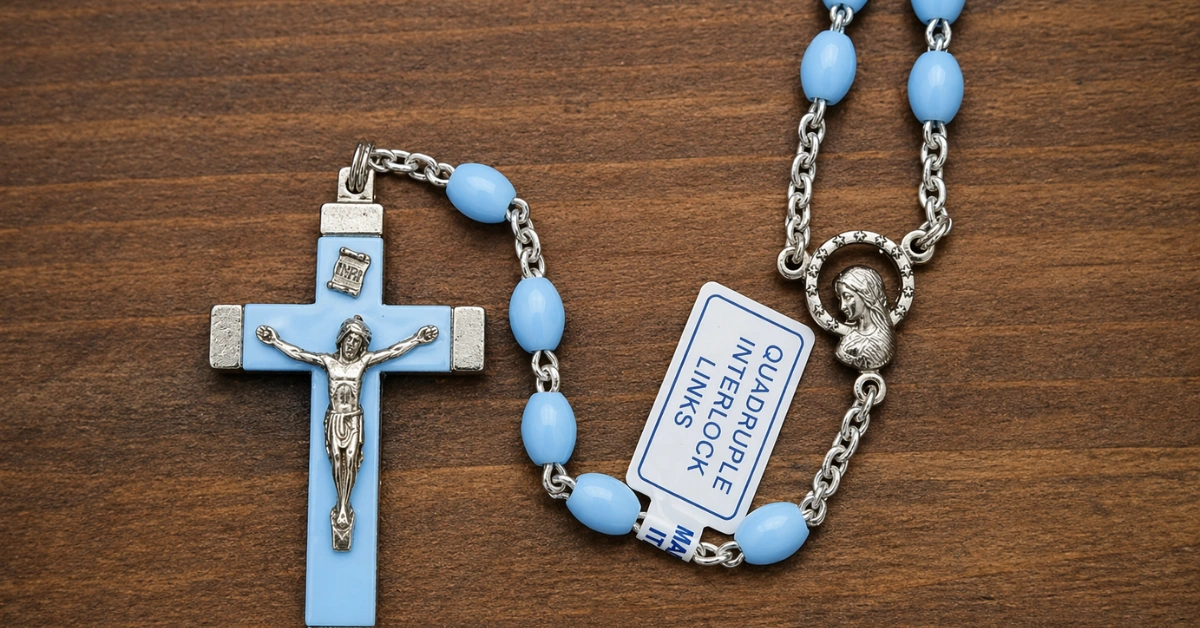
Italy did not simply produce rosaries. Italy perfected them. For centuries, the workshops of Italian craftsmen have been the source of the finest Catholic devotional objects in the world — rosaries made in Italy that carry within their beads not only skilled craftsmanship but an entire civilization of faith.
The Italian rosary is not a product. It is a tradition — one that stretches from the medieval monasteries of Tuscany to the artisan workshops of Rome, Venice, and the hill towns of Umbria, where the making of sacred objects has been understood as its own form of prayer.
Understanding what separates authentic Italian rosary beads from mass-produced alternatives requires understanding Italy’s unique relationship with Catholic devotional culture — a relationship built over fifteen centuries of unbroken faith, artistic genius, and the conviction that beauty in service of prayer is never wasted.
Why Italy Became the Center of Catholic Rosary Craftsmanship
The story of rosaries from Italy cannot be separated from the story of the Catholic Church itself.
Rome has been the seat of the papacy since the first century. Italy gave the Church some of its greatest saints — Francis of Assisi, Dominic, Thomas Aquinas, Catherine of Siena, Padre Pio — and some of its greatest artists — Michelangelo, Bernini, Fra Angelico — all of whom understood their work as an act of worship. This deep integration of faith and craft created a culture in which the making of sacred objects was never a secondary occupation but a primary vocation.
The rosary as a structured prayer devotion was popularized in the thirteenth century through the preaching of Saint Dominic and the Dominican Order — an order that found its earliest and strongest foothold in Italy. As the rosary spread through Catholic Europe, Italian craftsmen were already producing the finest beads, crosses, and centerpieces the devotion demanded.
By the Renaissance, Italian workshops had developed techniques in glassmaking, metalwork, and stonecutting that made their rosaries the standard against which all others were measured. The Murano glassmakers of Venice, producing crystal beads of extraordinary clarity and color. The goldsmiths of Florence, crafting crucifixes and centerpieces of unmatched detail. The stone carvers of Rome, cutting beads from jasper, coral, onyx, and agate that carried the weight and beauty of the earth itself.
This is the tradition behind every authentic rosary from Italy — not a marketing claim but a historical reality built over seven hundred years of continuous craftsmanship.
What Makes a Rosary Made in Italy Authentic
The question of authenticity matters deeply for those who seek an Italian rosary for devotional use — not as a collectible or a fashion accessory but as a genuine instrument of Catholic prayer.
An authentic rosary made in Italy carries several distinguishing characteristics:
Material quality — Genuine Italian rosary beads are produced from materials chosen for their beauty, durability, and tactile quality during prayer. Italian crystal beads — produced using traditional Murano techniques or similar Italian glassmaking methods — have a clarity, weight, and light-catching quality that mass-produced plastic beads cannot replicate. Natural wood beads from Italian olive wood, walnut, or fruitwood carry the warmth and grain of materials that have been used in sacred objects since the earliest centuries of the Church.
Craftsmanship in the connections — The wire, the links, the centerpiece, and the crucifix of an Italian rosary are assembled with precision that ensures both beauty and durability. An authentic Italian rosary is built to last — to accompany decades of daily prayer without the links weakening or the beads losing their finish.
The crucifix and centerpiece — In Italian rosary tradition, the crucifix and the Marian centerpiece are treated as the theological heart of the devotion — the Cross where the rosary begins and ends, and the image of Our Lady around whom the mysteries rotate. Italian craftsmen have always given these elements the greatest care, producing crucifixes of genuine artistic quality rather than the flat, featureless crosses that characterize mass production.
Provenance — A rosary made in Italy carries a traceable connection to the workshops and regions where Italian Catholic craftsmanship has been concentrated for centuries. Sanctum Veritas sources its Italian rosaries from Italy through suppliers with direct connections to these artisan traditions — ensuring that every rosary bearing the Italian name genuinely carries the Italian heritage.
Italian Rosary Beads — Materials and Their Traditions

The Italian rosary tradition encompasses a remarkable range of materials — each with its own history within Catholic devotional culture.
Crystal Rosaries from Italy
The crystal rosary from Italy represents perhaps the most iconic expression of Italian rosary craftsmanship. Italian crystal beads — produced in the tradition of Murano glass — are distinguished by their exceptional clarity, the depth of their color, and the way they interact with light during prayer.
A crystal rosary from Italy catches the light differently at every angle — creating a visual experience during prayer that devotional tradition has always connected to the divine light breaking through the material world. The clarity of crystal has been associated in Catholic thought with the transparency of a soul opened to grace — nothing hidden, nothing opaque, the light of faith passing through without obstruction.
Crystal rosaries from Italy are produced in every color of the rosary spectrum — the deep red catholic rosary in rich garnet crystal, the navy blue crystal rosary in Marian blue, the soft pink catholic rosary necklace in rose crystal — each one carrying both the color theology of Catholic devotion and the craftsmanship of the Italian tradition.
Italian Wood Rosary Beads
Wood has been used in Catholic sacred objects since the earliest centuries of the Church — a connection to the Cross that gives wooden rosary beads a theological dimension beyond their material beauty.
Italian wood rosary beads are crafted from several traditional materials:
Olive wood — The most theologically resonant of all Italian rosary materials. The olive tree appears throughout sacred scripture — the Mount of Olives where Christ prayed in agony, the olive branch of peace, the oil of anointing. Italian olive wood rosary beads carry this scriptural weight in their grain, their warmth, and their natural fragrance.
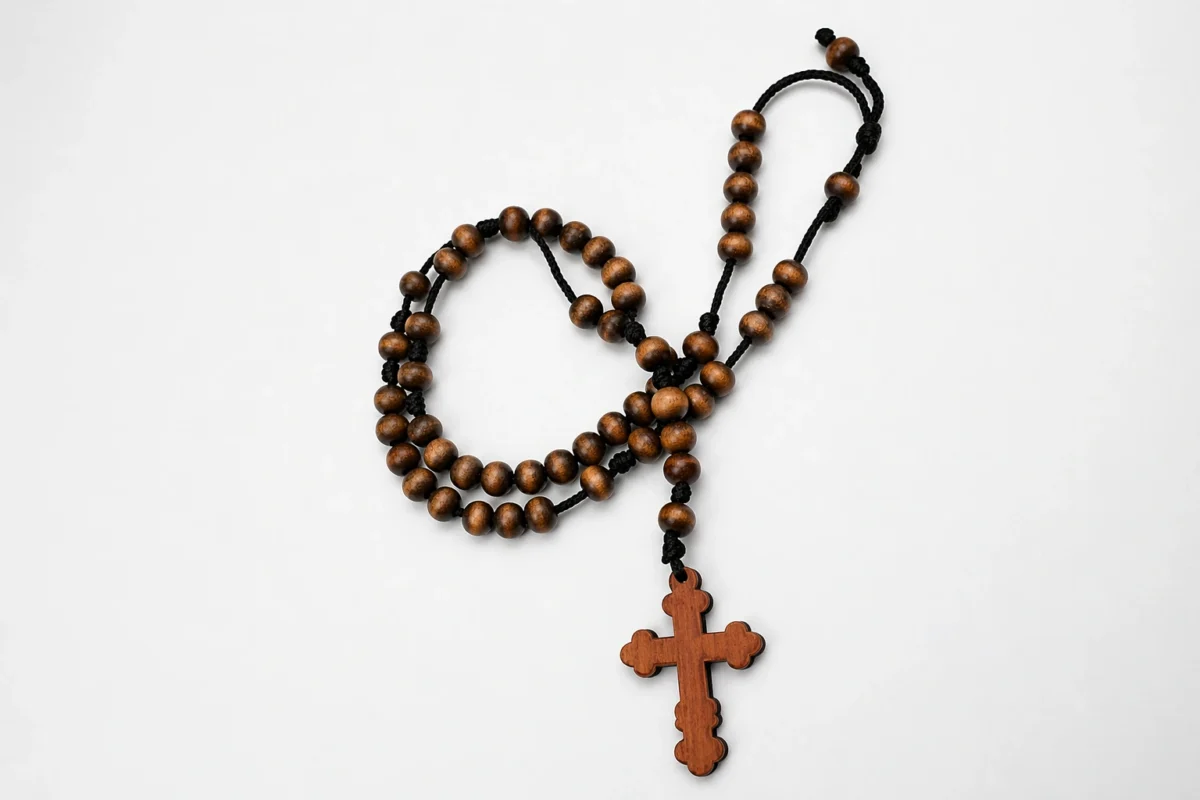
Walnut wood — Italian walnut is prized for its deep, rich grain and the darkness of its natural color. A Italian walnut wood catholic rosary carries the solemnity of its material — the dark wood evoking the wood of the Cross with a beauty that deepens over years of handling.
Natural wood — Lighter Italian wood rosary beads carry a simplicity and warmth that connects the prayer of the rosary to the natural world — the creation that the Incarnation sanctified by God taking flesh within it.
Our Italian natural wood rosary is crafted from this tradition — each bead carrying the warmth of Italian wood and the weight of centuries of sacred use.
The Spiritual Significance of Praying with an Italian Rosary
There is a dimension to praying with an authentic rosary from Italy that goes beyond the quality of the materials or the precision of the craftsmanship.
When a Catholic holds an Italian rosary during prayer, they enter a communion that stretches across centuries. The same tradition that produced this rosary produced the rosaries held by Italian peasants in medieval hill towns, by Renaissance cardinals in Roman basilicas, by missionaries who carried the rosary from Italy across the world, and by the saints whose intercession the Church invokes in every rosary.
Saint Padre Pio — born in Pietrelcina, Italy in 1887 — is perhaps the most famous rosary devotee of the modern era. He is said to have prayed fifteen decades of the rosary every day without fail, and he regarded the rosary as the most powerful weapon available to the Catholic soul. His rosary — simple, worn smooth by decades of constant prayer — was Italian. The tradition that shaped his devotion was Italian.
To pray with an Italian rosary is to pray within that same tradition — not as a historical curiosity but as a living reality that connects the person praying to the vast communion of saints who prayed with the same beads, in the same language of faith, before the same mysteries.
Rosaries from Italy and the Question of Blessing
An authentic Italian rosary, like any Catholic rosary, becomes a fully empowered sacramental when blessed by a priest. The blessing does not add to the beauty or craftsmanship of the rosary — it adds the Church’s official prayer over the object, dedicating it to sacred use and attaching to it the indulgences associated with the rosary devotion.
A rosary made in Italy, blessed by a Catholic priest, and prayed with daily attention becomes over time one of the most powerful sacramentals a Catholic can possess. The oil of the hands working their way through the decades, the slight wearing of the beads at the most frequently touched points, the associations of prayer and grace that accumulate over years of faithful use — all of these make the Italian rosary not just an object but a history.
Many Catholics treasure Italian rosaries passed down through generations — grandmothers to mothers to daughters, fathers to sons — each generation adding its prayers to the object until it becomes a physical record of a family’s faith.
How to Identify a Genuine Rosary Made in Italy
The market for religious goods includes many rosaries that claim Italian heritage without genuine connection to Italian craftsmanship. Identifying a genuine rosary from Italy requires attention to several factors:
Weight and feel — Genuine Italian crystal beads have a weight and density that distinguishes them immediately from plastic imitations. The beads should feel substantial in the hand — not light or hollow.
Light interaction — Italian crystal beads catch and refract light with a depth and clarity that plastic cannot replicate. Hold the beads in natural light and observe how the color moves through them.
The crucifix — A genuine Italian rosary carries a crucifix with genuine detail — the corpus of Christ rendered with care, the cross itself finished with precision. A flat, featureless crucifix is the clearest indicator of mass production.
The source — Purchase Italian rosaries from suppliers with genuine connections to Italian artisan traditions. Sanctum Veritas sources every Italian rosary in our collection through verified suppliers with direct ties to Italy’s devotional craftsmanship heritage.
Browse our full collection of rosaries made in Italy — each one carrying the authentic heritage of Italian Catholic craftsmanship.
Conclusion
A rosary from Italy is not simply a prayer tool produced in a particular country. It is the physical expression of a civilization that has spent fifteen centuries learning how to make beauty serve faith.
Every authentic Italian rosary — whether crystal, wood, or stone — carries within it the accumulated knowledge of craftsmen who understood that the object held during prayer shapes the quality of the prayer itself. The weight of the bead, the clarity of the crystal, the warmth of the wood, the precision of the crucifix — all of these are theological choices, not merely aesthetic ones.
Our collection of Italian rosaries from Italy is built on this understanding — each rosary sourced from suppliers with genuine connections to the Italian artisan tradition, each one made to accompany a serious and beautiful life of Catholic prayer.
Frequently Asked Questions
Rosaries from Italy carry a heritage of Catholic craftsmanship that is unmatched in depth and continuity. Italian artisans have been producing devotional objects for the Catholic Church for over seven centuries — developing techniques in crystal, wood, metal, and stone that make Italian rosary beads the standard of quality in Catholic devotional culture. The difference is material quality, craftsmanship precision, and the connection to a living tradition of sacred making.
Italian rosary beads are not automatically blessed at the point of purchase. A Catholic rosary becomes a fully empowered sacramental when blessed by a Catholic priest. After purchasing an Italian rosary, bring it to any Catholic priest and ask for the blessing of rosary beads — a simple and brief blessing that the Church encourages.
Crystal rosaries from Italy are produced from high-quality glass crystal — crafted using techniques rooted in the Italian glassmaking tradition, particularly the Murano tradition of Venice. The beads are distinguished by their clarity, their depth of color, and the way they interact with light. They are not made from natural crystal or quartz but from precision-crafted glass crystal of a quality that mass-produced rosary beads cannot replicate.
The most traditional Italian wood rosary beads are crafted from olive wood — the most theologically significant wood in Catholic tradition due to its scriptural associations with the Mount of Olives and the Garden of Gethsemane. Italian rosaries are also produced from walnut, fruitwood, and other native Italian hardwoods, each carrying its own grain, color, and tactile quality.
Italian crystal rosaries should be stored in a soft pouch or case when not in use to protect the beads from scratching. Clean the beads gently with a soft, damp cloth if needed. Avoid exposure to harsh chemicals, perfumes, or prolonged direct sunlight, which can affect the finish of the wire and the vibrancy of crystal beads over time.
Yes. While an Italian rosary is a specifically Catholic devotional object, its beauty, craftsmanship, and spiritual heritage make it a meaningful gift for anyone with a connection to Catholic faith — whether practicing, lapsed, or simply drawn to the depth of the tradition. Many non-Catholics treasure Italian rosaries received as gifts as objects of beauty and as tangible connections to a rich spiritual inheritance.