
Blog
Wood Rosary Necklace: Types, Meaning, and the Catholic Tradition Behind Every Bead

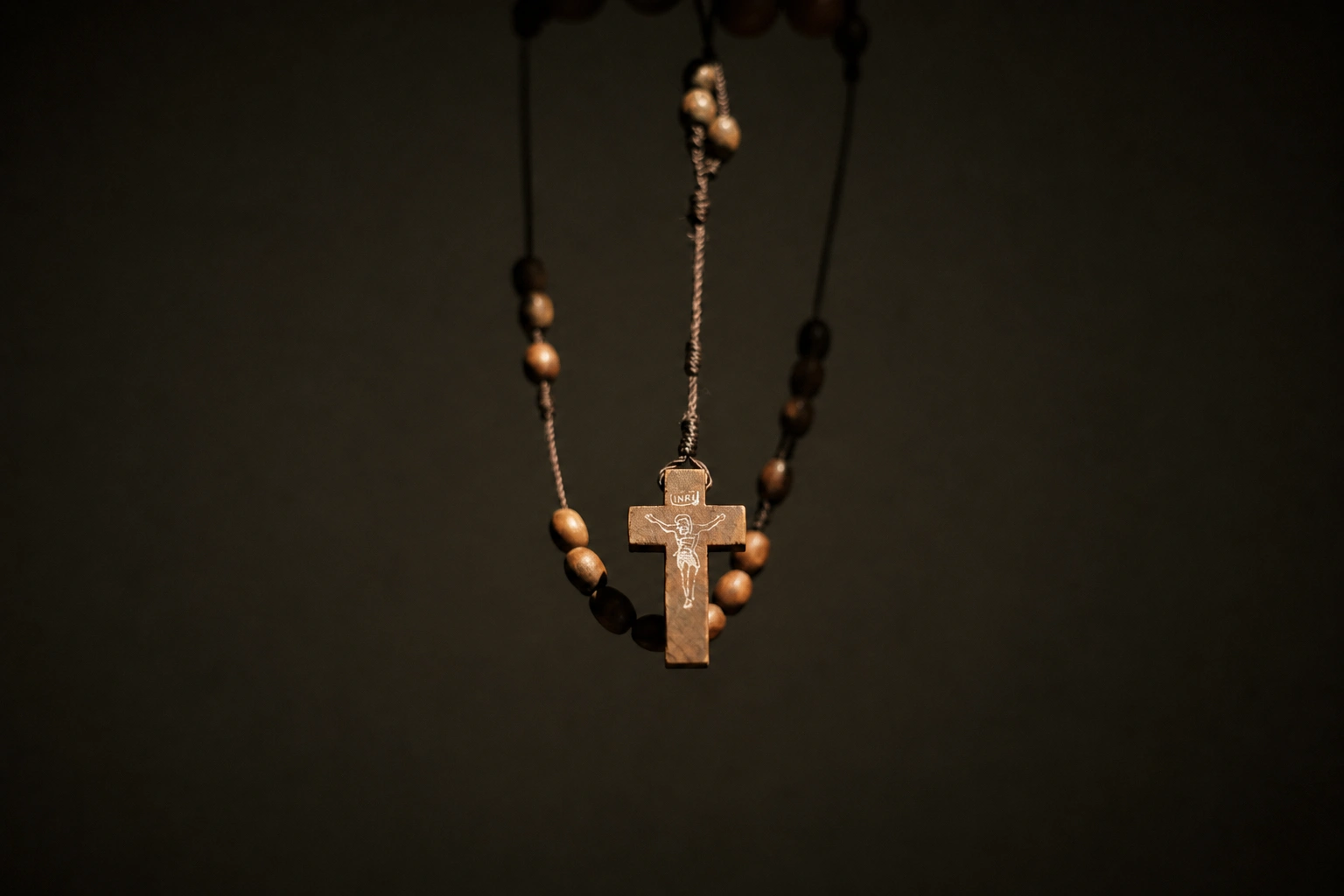
Wood carries memory in a way no other material does. Every wooden rosary necklace begins as a living thing — a tree rooted in soil, shaped by seasons, growing slowly toward the light. When that wood is cut, shaped, and strung into a rosary, it does not lose that history. It carries it into the hands of the person praying — the warmth of the grain, the weight of the bead, the slight irregularity that tells the fingers they are holding something made from the earth rather than extruded from a machine.
In Catholic devotional tradition, the wood rosary necklace occupies a place of particular reverence. Wood connects the rosary to the Cross — the instrument of salvation cut from a tree, planted in the ground at Golgotha, and raised as the central symbol of the entire faith. To pray the rosary with wooden beads is to hold, in a very real sense, a reminder of what the Cross was made from.
The Catholic Significance of Wood in Sacred Objects
Long before the rosary existed as a formal devotion, wood held deep theological significance in Catholic sacred tradition.
The Cross of Christ — the defining object of Christian faith — was wood. The manger at Bethlehem where the Incarnate God first lay — wood. The carpenter’s workshop in Nazareth where Christ spent thirty years of His hidden life — wood. The boat from which He preached on the Sea of Galilee — wood. The table of the Last Supper — wood.
Scripture itself draws this connection explicitly. The wood of the Cross stands in deliberate theological contrast to the wood of the Tree of Knowledge in the Garden of Eden — the tree through which sin entered the world redeemed by the tree on which the Savior died. Saint Paul writes that Christ became a curse for us, “for it is written: cursed is everyone who hangs on a tree” — the Greek word xulon, meaning wood, appearing in the original text of Galatians 3:13.
This theological weight is carried into every wooden rosary necklace. The material itself is not neutral. It speaks before the first prayer is said.
Types of Wood Rosary Necklaces and Their Meanings
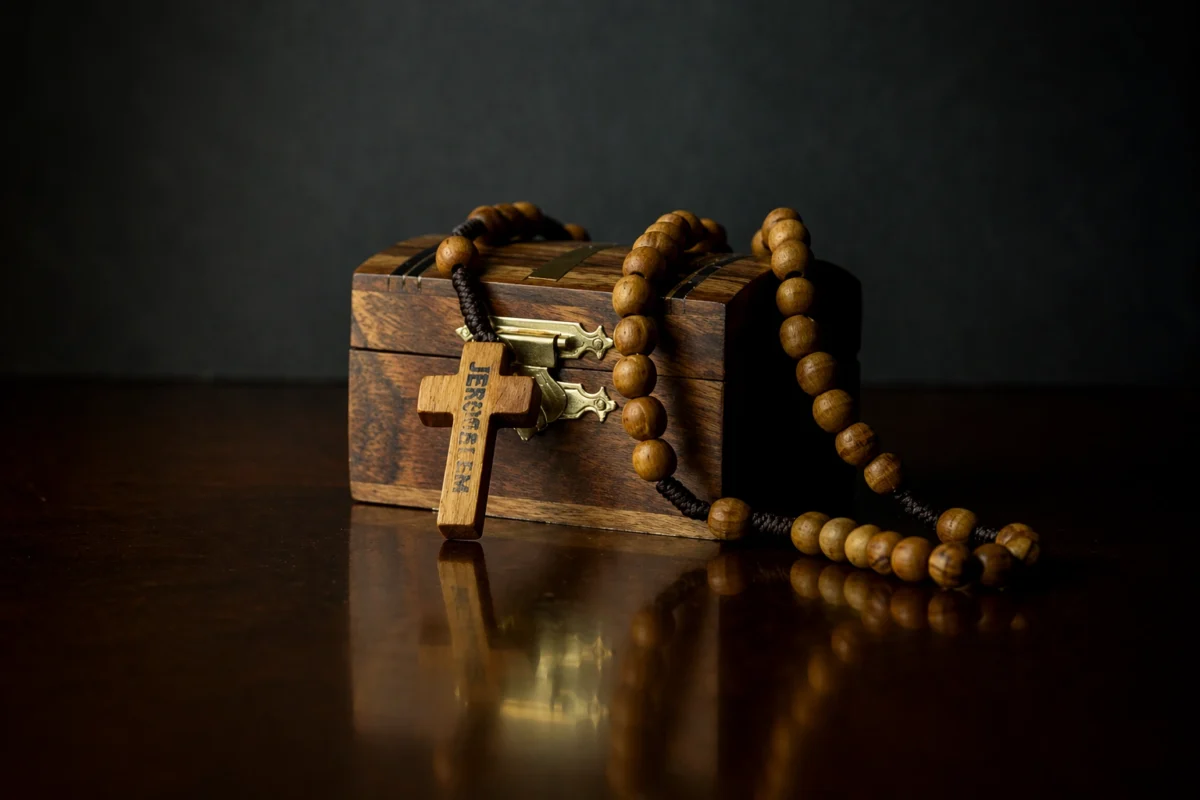
The Catholic tradition of wooden rosary necklaces encompasses a remarkable variety of woods — each with its own grain, color, weight, and theological association. Understanding these differences transforms the choice of a wood rosary necklace from an aesthetic preference into a devotional decision.
Olive Wood Rosary Necklace
The olive wood rosary necklace is the most theologically resonant of all wooden rosary types — its material carrying more direct scriptural and devotional associations than any other wood used in Catholic sacred objects.
The olive tree appears throughout the Old and New Testaments as a symbol of peace, anointing, and the presence of God. The Mount of Olives — the hill overlooking Jerusalem where Christ prayed in agony the night before His Passion, where He ascended into heaven after the Resurrection, and where Catholic tradition holds He will return in glory — is named for the olive groves that covered its slopes.
The oil pressed from Italian olive trees has been used for centuries in Catholic sacraments — the oil of baptism, the oil of confirmation, the oil of the anointing of the sick. The wood of the same tree, shaped into rosary beads, carries those sacramental associations into the hands of the person praying.
An olive wood rosary necklace crafted in Italy — from trees grown in the same Mediterranean soil that surrounded the biblical olive groves of Palestine — connects the prayer of the rosary to the deepest roots of salvation history. Our Italian natural wood rosary is crafted from this tradition, each bead carrying the warmth and grain of Italian olive wood.
Walnut Wood Rosary Necklace
The Italian walnut wood rosary necklace occupies a distinct place within the wooden rosary tradition — its deep, rich grain and naturally dark color giving it a solemnity and weight that lighter woods do not carry.
Italian walnut — Juglans regia — has been prized by Italian craftsmen for centuries in the production of sacred furniture, church interiors, and devotional objects. Its tight grain holds detail exceptionally well, making it the wood of choice for craftsmen who demand both beauty and durability in the objects they produce.
The dark, warm color of walnut wood sits naturally within the devotional palette of the Sorrowful Mysteries — its depth evoking the wood of the Cross, the darkness of Gethsemane, the weight of the Passion. Those whose rosary prayer centers on meditation of Christ’s suffering and sacrifice often find the walnut wood rosary necklace the most honest material expression of that prayer.
Our Italian walnut wood catholic rosary is crafted from genuine Italian walnut — its deep grain and substantial weight making it a rosary built for serious, lifelong devotional use.
Black Wooden Rosary Necklace
The black wooden rosary carries the full theological symbolism of the color black within the warmth and tactile quality of natural wood — creating a rosary that combines the solemn meaning of black with the earthy grounding of wooden beads.
Black in Catholic devotional tradition speaks of penance, spiritual warfare, and intercessory prayer for the dead — the same symbolism carried by the black crystal rosary but expressed through a material that grounds the prayer in the natural world rather than elevating it into the luminous quality of crystal.
The black wooden rosary is frequently chosen by:
- Those who pray the rosary as a daily act of penance and mortification
- Those who pray specifically for the souls of the deceased — particularly during the month of November
- Those drawn to the protective dimension of the rosary as a spiritual weapon against darkness
- Men whose devotional life is built around serious, disciplined prayer rooted in the Cross
Our Italian black wood rosary carries this tradition — its dark wooden beads combining the theological weight of black with the tactile warmth that only natural wood provides.
White Wooden Rosary Necklace
The white wooden rosary stands at the opposite end of the devotional spectrum from the black — its color and material together expressing purity, innocence, and the luminous joy of Catholic faith at its most hopeful.
White wood rosary necklaces are crafted from naturally pale woods or from wood that has been finished in white — a color that in Catholic tradition carries the symbolism of baptismal grace, the Resurrection, and the new life that the faith promises. The combination of white color and natural wood material gives this rosary a quality that is simultaneously pure and earthy — the purity of the color rooted in the warmth of the material beneath it.
The white wooden rosary is among the most frequently chosen rosaries for:
- First Communion gifts — where white speaks directly to the purity and new life of receiving Christ in the Eucharist for the first time
- Baptism gifts — welcoming a new soul into the faith with a rosary whose color mirrors the white baptismal garment
- Children beginning their rosary devotion — the warmth of wood making it more tactile and natural in young hands than crystal beads
Our Italian white wood rosary is crafted for exactly these sacred beginnings — its white wooden beads combining purity of color with the warmth of natural material.
Wood Rosary Necklace vs Crystal Rosary — Understanding the Difference
The choice between a wooden rosary necklace and a crystal rosary is not merely aesthetic — it reflects a genuine difference in the devotional experience the two materials provide.
Crystal rosaries — including the crystal rosaries from Italy produced in the tradition of Italian glassmaking — engage the sense of sight as their primary devotional contribution. The way crystal interacts with light during prayer — refracting it, deepening the color, creating a visual experience that Catholic tradition connects to divine grace — makes crystal rosaries particularly suited to meditative prayer where the eyes play a role in the contemplation.
Wooden rosary necklaces engage the sense of touch as their primary devotional contribution. The grain of the wood under the fingers, the warmth of the material against the skin, the slight variation in each bead that tells the fingers they are holding something grown rather than manufactured — these tactile qualities make the wooden rosary particularly suited to the kind of prayer that happens in darkness, in motion, or with eyes closed in deep interior meditation.
Many devoted Catholics own both — a crystal rosary for moments of quiet, visually engaged prayer and a wooden rosary necklace for the rosary prayed in the dark of early morning, during the night office, or in the midst of work and movement.
The Wooden Rosary Necklace in Catholic History
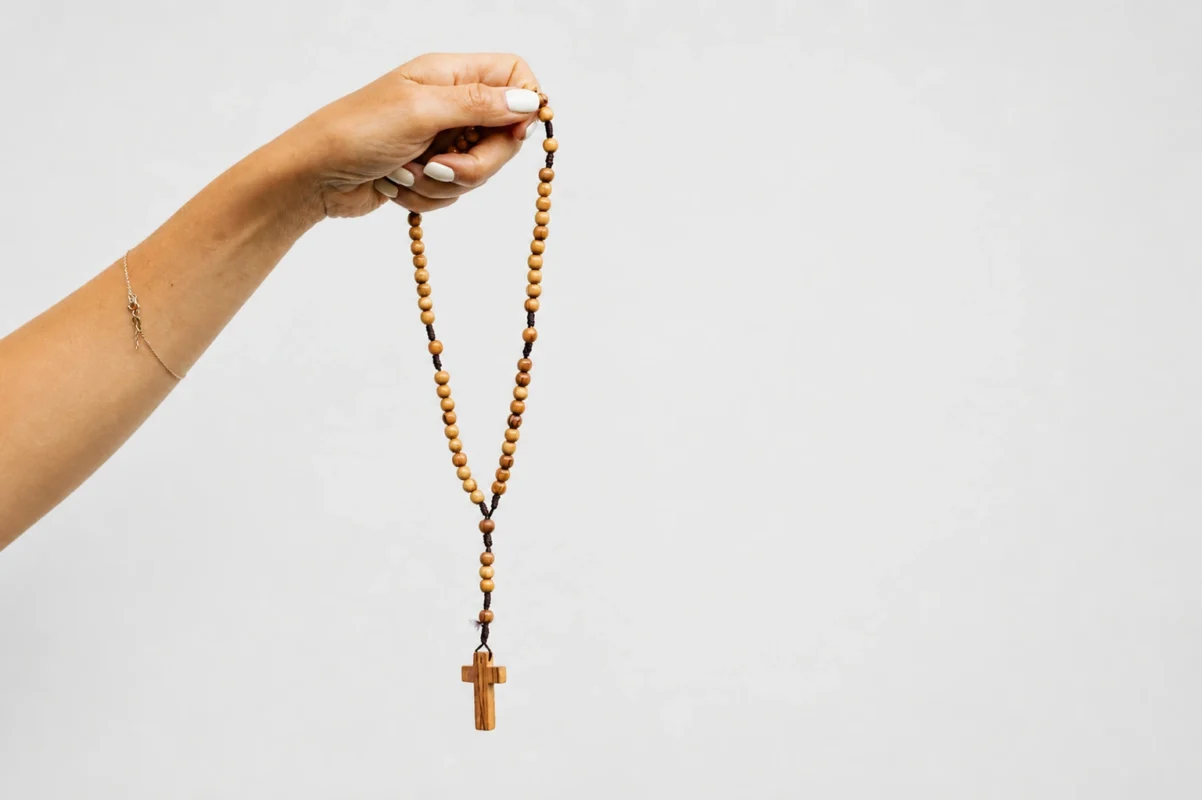
The wooden rosary has the deepest historical roots of any rosary material — predating the elaborate crystal and gemstone rosaries that became fashionable during the Renaissance by centuries.
The earliest rosaries — the prayer beads used by desert monks in the third and fourth centuries to count their repetitions of the Jesus Prayer and the Psalms — were almost certainly made from wood, bone, or knotted cord. These were not objects of beauty but of function — tools for disciplined prayer in the tradition of the hesychast monks who sought union with God through ceaseless interior prayer.
When Saint Dominic and the Dominican Order systematized the rosary devotion in the thirteenth century, the rosaries distributed to the faithful were simple wooden beads — accessible to the poor, durable in daily use, and connected through their material to the Cross of Christ.
The great saints of the rosary tradition were almost all associated with simple wooden rosaries. Saint Padre Pio’s rosary — worn smooth by decades of daily prayer — was wooden. The rosaries distributed by Blessed Alan de la Roche, who revived rosary devotion in the fifteenth century, were wooden. The rosary of the shepherd children at Fatima — the simple beads on which Our Lady herself prayed alongside them — was wooden.
To pray with a wooden rosary necklace today is to stand within this unbroken tradition — the same material, the same devotion, the same mysteries, the same Mother.
Caring for a Wooden Rosary Necklace
A wooden rosary necklace, properly cared for, becomes more beautiful with age — the wood darkening slightly with the oil of the hands, the grain deepening, the beads developing a patina that no new rosary possesses.
Storage — Store a wooden rosary necklace in a soft pouch or a rosary case when not in use. Avoid leaving it in direct sunlight for extended periods, which can dry and crack the wood over time.
Cleaning — Wipe wooden beads gently with a soft, dry cloth. If the wood appears dry, a very small amount of natural wood oil applied with a soft cloth will restore the luster and protect the grain. Avoid water, which can swell and crack wooden beads.
Handling — The natural oils of the hands are beneficial for wooden rosary beads over time — the daily handling of a wooden rosary gradually conditions the wood and develops the patina that marks a well-loved and faithfully used rosary. Do not be afraid to use a wooden rosary daily. It is made for exactly that.
Repair — If a link breaks or a bead cracks on a wooden rosary necklace, bring it to a Catholic religious goods store or a craftsman familiar with rosary repair. A wooden rosary worth praying with is worth repairing rather than replacing.
Conclusion
The wooden rosary necklace is the oldest, most theologically grounded, and most historically connected of all rosary types. Every grain of the wood, every slight variation in the beads, every degree of warmth the material holds in the hands during prayer — all of it speaks of the Cross, of the earth, of the living creation that God sanctified by taking flesh within it.
A wooden rosary necklace is not a substitute for a more elaborate crystal or gemstone rosary. It is in many ways the original — the form the rosary took when it was simply a tool for the poor, the faithful, and the saints who prayed it into the tradition that the whole Church now inherits.
Frequently Asked Questions
A wooden rosary necklace is used for the same purpose as any Catholic rosary — the structured meditative prayer of the rosary, counting the Our Fathers, Hail Marys, and Glory Bes of each decade while meditating on the mysteries of the faith. The wooden material adds a tactile warmth and a theological connection to the Cross that many Catholics find deepens their prayer experience.
A black wooden rosary carries the Catholic symbolism of penance, spiritual warfare, and solemn intercessory prayer — its dark color evoking the weight of the Cross and the seriousness of penitential devotion. A white wooden rosary carries the symbolism of purity, innocence, and new life — its light color connecting it to baptismal grace, the Resurrection, and the joy of Catholic faith at its most hopeful.
Olive wood is the most theologically significant wood for a Catholic rosary due to its direct scriptural associations with the Mount of Olives, the Garden of Gethsemane, and the sacramental use of olive oil in the Church’s rites. However, walnut, fruitwood, and other natural woods each carry their own devotional qualities. The best wood is ultimately the one that most supports the interior life of the person praying with it.
A well-crafted wooden rosary necklace, properly cared for, can last for decades — even generations. The wood itself is extremely durable when kept dry and stored appropriately. The most common point of wear is the wire connecting the beads, which can be repaired or replaced without affecting the beads themselves. Many Italian wooden rosaries become family heirlooms passed down across multiple generations.
Yes. The wooden rosary necklace is designed to be worn — its beads and construction suited to both prayer use and wear as a Catholic devotional accessory. Wearing a rosary as a necklace is a longstanding Catholic tradition expressing public devotion to the faith. The durability and warmth of wood make it particularly suitable for daily wear.
An Italian wooden rosary is distinguished by the quality of its wood — sourced from Italian olive, walnut, and fruitwood trees with centuries of use in sacred object production — and by the craftsmanship of its construction. Italian artisans have been producing wooden rosaries for over seven centuries, developing techniques that ensure both the beauty and the durability of the finished object. The crucifix and centerpiece of a genuine Italian wooden rosary carry the same standard of craftsmanship as the beads themselves.