
Blog
Black Rosary Meaning: The Complete Catholic Guide to Its Symbolism and Power

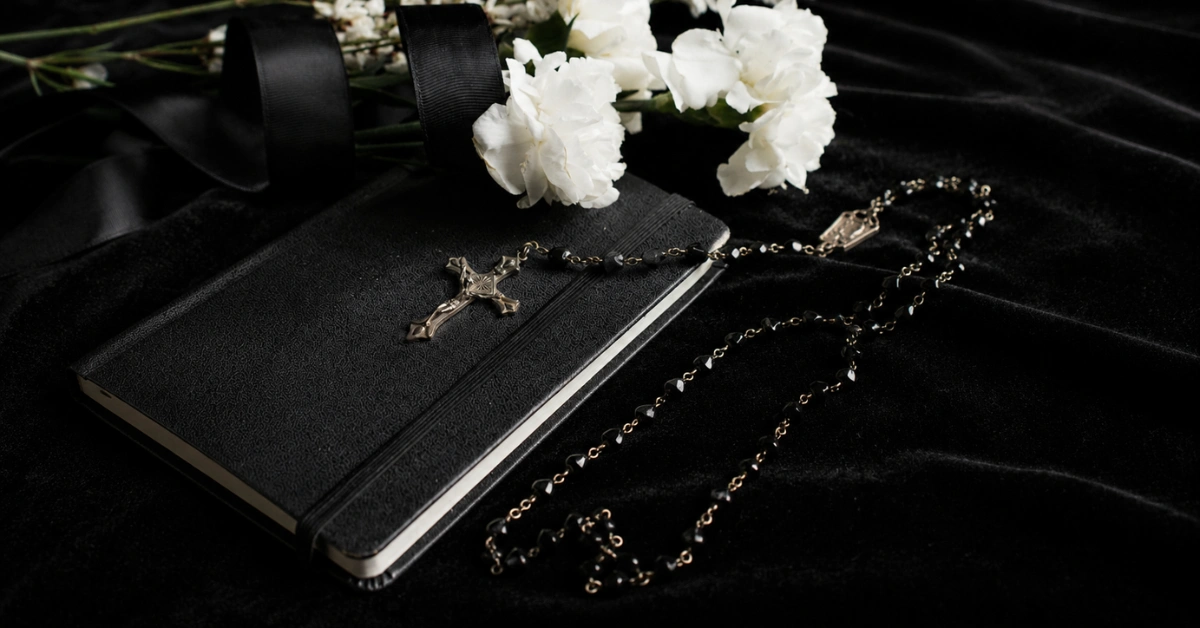
Black is the color that demands honesty. Every other rosary color carries consolation within its symbolism — the pink of Marian joy, the blue of heavenly peace, the white of baptismal purity. Black carries no consolation. It carries truth — the truth of mortality, of sin, of the spiritual warfare that Catholic faith has never pretended does not exist, and of the particular courage required to pray from within that reality rather than around it.
The black rosary meaning is the most misunderstood in Catholic devotional tradition. It is confused with gang culture, with the occult, with death in its most frightening form. None of these associations belong to it. What belongs to it is a theology older and more serious than any of its misinterpretations — a theology of penance, protection, spiritual warfare, and the solemn intercession for the dead that the Catholic faith has always understood as one of the most urgent forms of prayer available to the living.
What Does a Black Rosary Mean in Catholic Tradition?
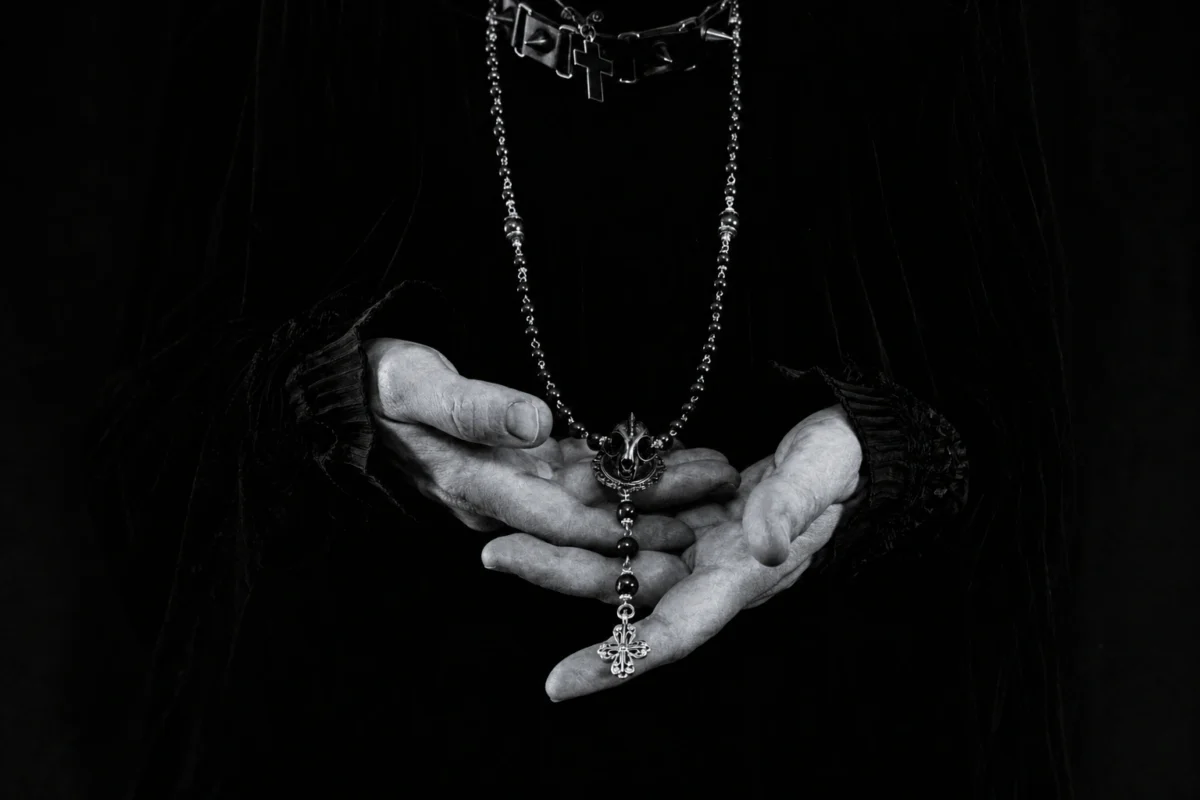
The black rosary meaning rests on four distinct theological pillars — each one drawing from a specific dimension of Catholic faith, liturgical tradition, and the Church’s understanding of the spiritual life.
Penance and Mortification
Black is the color of penance — the interior conversion that Catholic tradition has always regarded as the necessary foundation of any genuine spiritual life. The black rosary is the natural companion of the penitential seasons of the Catholic year — Advent and above all Lent — when the Church calls its faithful to fasting, prayer, and almsgiving as the three expressions of the conversion of heart that every Catholic soul requires continuously.
Penance in Catholic theology is not punishment. It is medicine — the specific remedy the Church applies to the wound of sin, treating the disorder that sin introduces into the soul with the counter-movement of deliberate self-denial, prayer, and reparation. The black rosary prayed as an act of penance is a precise theological act — the person praying acknowledging the reality of sin and choosing the remedy the Church offers over the comfort that avoidance provides.
Spiritual Warfare
The black rosary is the most explicitly protective of all rosary colors — its symbolism rooted in the Catholic tradition of spiritual warfare that goes back to the apostolic Church.
Saint Paul wrote to the Ephesians with unmistakable directness: “For our struggle is not against flesh and blood, but against the rulers, against the authorities, against the powers of this dark world and against the spiritual forces of evil in the heavenly realms.” Catholic faith has never softened this apostolic teaching into metaphor. The spiritual forces Paul describes are real, personal, and active — and the weapons the Church offers against them are specifically spiritual.
The rosary has been identified in Catholic tradition as the most powerful of these spiritual weapons — specifically because it invokes the intercession of the Virgin Mary, whose role in crushing the power of evil is promised in the very first book of Scripture. The black rosary prayed as an act of spiritual warfare carries both the theological weight of the color and the intercessory power of the Marian prayer — a combination that Catholic tradition regards as among the most effective forms of protection available to the faithful.
Mourning and Intercession for the Dead
Black is the Catholic color of mourning — the color worn at funerals, the color of the vestments used on Good Friday and All Souls Day in the traditional Latin Mass, the color that the Church has historically associated with death and with the prayers offered for those who have passed through it.
The black rosary prayed for the dead carries a specific and urgent theological meaning. Catholic teaching on Purgatory — the state of final purification through which souls not fully ready for the beatific vision pass before entering heaven — gives the prayers of the living a direct and consequential purpose in relation to the dead. The rosary prayed for the souls in Purgatory is not a gesture of sentiment. It is an act of intercession — invoking Our Lady’s maternal care over souls who can no longer pray for themselves but who benefit directly from the prayers of those still living.
The month of November is dedicated in the Catholic calendar to prayer for the Poor Souls in Purgatory. A black rosary prayed daily throughout November for specific deceased family members, friends, or the most forgotten souls in Purgatory is one of the most ancient and powerful Catholic responses to death in the community of faith.
The Sorrowful Mysteries
Within the four sets of rosary mysteries, the black rosary finds its most natural home in the Sorrowful Mysteries — the five meditations on Christ’s agony and death prayed on Tuesdays and Fridays:
- The Agony in the Garden
- The Scourging at the Pillar
- The Crowning with Thorns
- The Carrying of the Cross
- The Crucifixion and Death of Our Lord
These are the mysteries of darkness and suffering — the darkest hours of salvation history before the dawn of the Resurrection. Praying them with black beads creates a unity between the color of the object in the hand and the darkness of the mystery being contemplated — the person praying entering the garden with Christ, standing at the pillar with Him, carrying the Cross with Him, remaining at the foot of it with His mother until the end.
The Saint Benedict Black Rosary — Protection and Exorcism
Of all the specific forms of the black rosary, the Saint Benedict black rosary carries the most explicitly protective symbolism in Catholic devotional tradition.
Saint Benedict of Nursia — born in 480 AD, founder of Western monasticism, and patron saint of Europe — is associated in Catholic tradition with a specific medal whose reverse carries an elaborate arrangement of letters encoding a prayer of exorcism against evil. The Saint Benedict Medal has been used in Catholic devotional practice since the medieval period specifically for protection against evil, temptation, and spiritual attack.
A black rosary incorporating the Saint Benedict Medal — either as its centerpiece or as part of its crucifix — combines the exorcistic power of the Benedictine tradition with the Marian intercession of the rosary and the protective symbolism of the color black. The result is the most explicitly anti-evil devotional object in the Catholic sacramental tradition.
The letters on the Saint Benedict Medal’s reverse decode as follows:
CSSML — Crux Sacra Sit Mihi Lux — May the Holy Cross be my light
NDSMD — Non Draco Sit Mihi Dux — May the dragon never be my guide
VRSNSMV — Vade Retro Satana, Nunquam Suade Mihi Vana — Begone Satan, never tempt me with your vanities
SMQLIVB — Sunt Mala Quae Libas, Ipse Venena Bibas — What you offer is evil, drink the poison yourself
This prayer — encoded on a medal attached to a black rosary — makes the Saint Benedict black rosary one of the most theologically precise instruments of spiritual protection the Catholic sacramental tradition has ever produced.
Our Italian black wood rosary is crafted for exactly this dimension of Catholic devotional life — its black wooden beads carrying the full weight of penitential and protective symbolism in a rosary built for serious, lifelong prayer.
Black Rosary Meaning — What It Is Not
Black Rosary Meaning in Gang Culture
The association between black rosaries and gang culture — particularly in parts of the United States — is a cultural appropriation of a Catholic devotional object that has nothing to do with the object’s actual meaning.
The black rosary worn as a gang symbol carries no Catholic devotional content — it is a religious object stripped of its theological meaning and repurposed as a cultural marker. The Catholic meaning of the black rosary — penance, spiritual warfare, protection against evil, intercession for the dead — stands entirely apart from and in direct opposition to the associations gang culture has attached to it.
A Catholic wearing a black rosary for its genuine devotional purpose wears it as an act of prayer and protection — the most ancient and precise meaning of this specific object in the tradition that created it.
Black Rosary and the Occult
The black rosary has no connection to the occult, Satanism, or any spiritual tradition that stands in opposition to Catholic faith. The color black in Catholic tradition is specifically associated with protection against evil — not with evil itself. The Saint Benedict black rosary is literally an instrument of exorcism — the most explicitly anti-occult devotional object the Catholic tradition has produced.
Anyone who associates the black rosary with occult practice has confused the color of the weapon with the enemy the weapon is used against.
Black Crystal Rosary Meaning — Light Within Darkness
The black crystal rosary adds a theological dimension to black rosary symbolism that solid black beads do not possess — the luminosity of crystal within the darkness of the color.
Black crystal beads catch light even through their darkness — the crystal refracting what light reaches it into subtle highlights that give the rosary a visual quality that pure black cannot achieve. This behavior of black crystal during prayer carries its own theological precision — the light that darkness cannot overcome, the hope that persists within mourning, the certainty of the Resurrection that Catholic faith maintains even at the foot of the Cross.
Our black crystal rosary necklace is crafted to carry this dimension — its black crystal beads simultaneously carrying the solemn weight of the color and the luminosity that crystal’s nature adds to it.
Black Tourmaline Rosary Meaning — Natural Stone and Spiritual Protection
The black tourmaline rosary represents the intersection of Catholic gemstone tradition with the specifically protective symbolism of the black rosary.
Black tourmaline is a naturally occurring silicate mineral whose deep black coloring comes from its iron content — a stone shaped by the earth’s own geological forces into a material of extraordinary density and solidity. In Catholic devotional practice, the choice of natural stone for rosary beads connects the prayer of the rosary to the Catholic theology of creation — the natural world as a reflection of God’s creative power and generosity, its materials carrying within them something of the dignity of the creation they come from.
A black tourmaline rosary prayed with the intention of spiritual protection combines the natural weight and solidity of genuine stone — each bead substantial and grounding in the hand — with the protective symbolism of black and the intercessory power of the Marian prayer. It is among the most grounded and physically present of all rosary experiences — the stone connecting the prayer to the earth in a way that glass or plastic beads entirely lack.
Who Should Pray with a Black Rosary
The black rosary is not for everyone — and understanding who it most naturally serves helps identify whether it is the right devotional choice.
The black rosary is most naturally chosen by:
Those in serious spiritual combat — Catholics who face specific spiritual attacks, who pray for family members in grave danger, or who carry the weight of serious intercession for the most spiritually vulnerable understand instinctively why the protective symbolism of black belongs in their hands during prayer.
Those praying for the dead — the November rosary prayed for deceased family members, the rosary at a deathbed, the rosary prayed for the most forgotten souls in Purgatory — all find in the black rosary the most theologically honest material expression of their intention.
Those in grief — not as a permanent devotional choice but as the rosary prayed through the darkest seasons of human experience. The black rosary does not offer consolation by pretending the darkness is not dark. It offers the prayer of the Church within the darkness — which is the only consolation Catholic faith has ever claimed to offer.
Men whose faith is built around serious, disciplined prayer — the protective, penitential dimension of the black rosary connects naturally to a masculine spirituality rooted in the Cross rather than in comfort.
Those devoted to the Sorrowful Mysteries — whose daily rosary meditates on the Passion of Christ with the attention and intention that those mysteries deserve.
Conclusion
The black rosary is not a symbol of death in the sense that death is an ending. It is a symbol of death in the sense that Catholic faith has always understood death — as the threshold through which every soul passes toward the judgment and mercy of God, accompanied by the prayers of those who remain living, interceded for by the mother whose Son conquered death from within it.
Black is the color that does not pretend. It does not soften the reality of sin, of spiritual warfare, of mortality, or of the darkness that genuine faith must be willing to enter and pray from within. The black rosary carried into that darkness is not a symbol of despair. It is a weapon, a prayer, and a declaration — that the darkness has not overcome the light, that the Cross stands at the center of every shadow, and that the mother who stood at its foot still intercedes for every soul that calls on her from within the darkness she knows better than any other creature ever has.
Our Italian black wood rosary and black crystal rosary necklace are crafted for those who pray from within that reality — each one built for the full weight of what black means in Catholic devotion.
Frequently Asked Questions
A black rosary symbolizes penance, spiritual warfare, mourning, and protection against evil in Catholic tradition. It is most naturally associated with the Sorrowful Mysteries, prayers for the dead, and the specifically protective prayer of the Saint Benedict rosary tradition.
Gang culture has appropriated the black rosary as a cultural symbol entirely disconnected from its Catholic meaning. The genuine Catholic meaning — penance, spiritual protection, intercession for the dead — stands in direct opposition to any association with violence or criminal culture.
No — the black rosary has no connection to the occult or bad luck. In Catholic tradition black specifically represents protection against evil. The Saint Benedict black rosary is literally an instrument of exorcism — the most explicitly anti-evil object in the Catholic sacramental tradition.
A Saint Benedict black rosary combines the Marian intercession of the rosary with the exorcistic prayer encoded in the Saint Benedict Medal — making it the most explicitly protective devotional object in Catholic tradition. It is used for spiritual protection, deliverance prayer, and protection of families against spiritual attack.
A black crystal rosary catches light through its darkness — carrying the theological message of hope within mourning. A black wood rosary carries the earthy warmth of natural material — connecting the protective symbolism of black to the physical reality of the Cross itself. Both carry identical theological meaning through different material expressions.
Yes — any Catholic may pray with a black rosary regardless of gender or age. Its symbolism of penance, protection, and intercession for the dead belongs to the entire Catholic community. It is not restricted to any specific group despite cultural misappropriations of the object.