Blog
How Many Beads Are on a Rosary? Complete Guide to Rosary Bead Count and Meaning

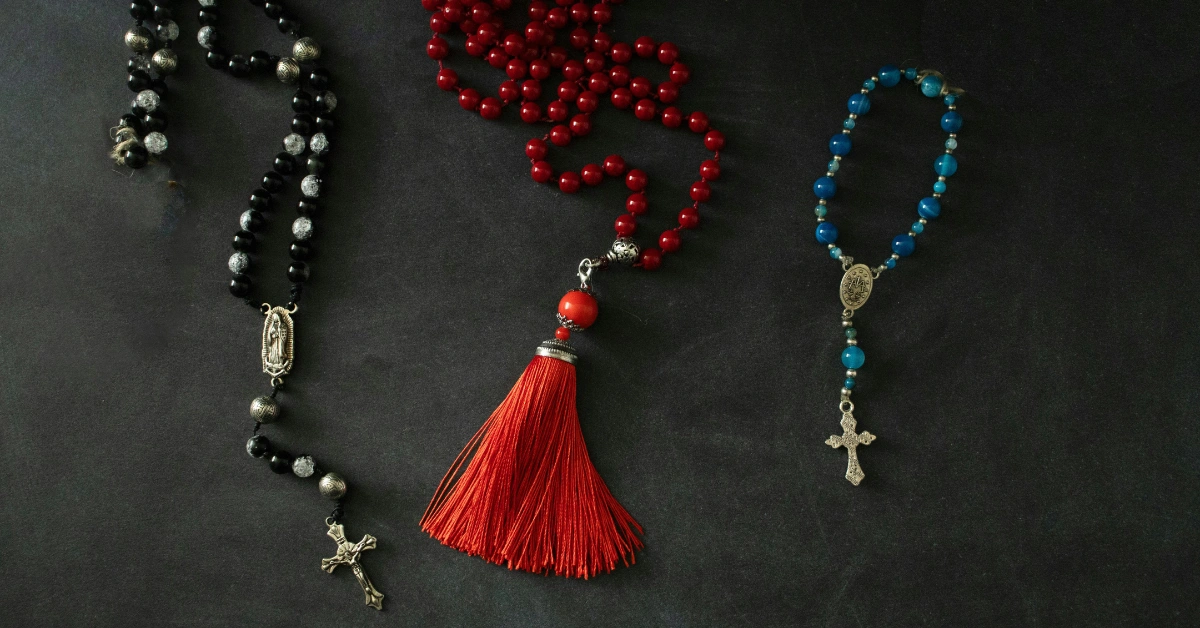
If you have ever held a rosary in your hands and wondered how many beads are on a rosary, you are not alone. This is one of the most commonly asked questions by Catholics who are just beginning their prayer journey and by those who have prayed the rosary for years but never stopped to count.
A standard Catholic rosary contains 59 beads, and every single one of those beads has a specific purpose, a specific prayer, and a specific place in one of the most powerful devotions in the Catholic faith. This is not a random number. Each bead is intentionally placed to guide your hands, your lips, and your heart through a complete cycle of prayer and meditation.
However you will discover the exact bead count, the structure behind every section of the rosary, what each bead represents, how many Hail Marys are in a rosary, the four sets of mysteries, the different types of rosaries, and the materials rosary beads are made from. By the time you finish reading, you will understand the rosary not just as a chain of beads, but as a deeply meaningful instrument of Catholic prayer.
How Many Beads Are on a Rosary Necklace?
A traditional Catholic rosary contains 59 beads in total. This number is not decorative — it reflects the exact number of prayers required to complete one full rosary cycle.
Here is the complete bead count breakdown:
- 53 small beads — used for praying the Hail Mary
- 6 large beads — used for praying the Our Father
- 1 crucifix — where the Apostles’ Creed is recited to begin the rosary
The 53 small Hail Mary beads are arranged into five groups of ten, known as decades, plus three additional small beads on the opening strand. The 6 large Our Father beads include one on the opening strand and five more separating each of the five decades.
This specific rosary bead count creates a rhythm that has guided Catholic prayer for centuries. When your fingers move from bead to bead, your mind is freed from counting and is able to rest fully in prayer and meditation on the mysteries of Christ and Mary.
What Is the Structure of a Rosary?
Understanding the rosary bead count becomes much clearer when you understand the physical structure of the rosary itself. A standard five decade rosary has two distinct parts — the opening tail strand and the main circular loop.
The Opening Tail Strand
The tail strand begins at the crucifix and moves upward. Starting at the crucifix, you recite the Apostles’ Creed. Moving up, you reach one large bead where you pray the Our Father. Next come three small beads, one for each of the three theological virtues — faith, hope, and charity — where three Hail Marys are prayed. After those three beads comes one more large bead where the Glory Be is recited. This large bead also serves as the connector between the tail and the main loop of the rosary.
This opening strand prepares the heart and mind before entering the five decades of prayer. If you are just beginning your prayer practice, understanding the full sequence of how to pray the rosary will make this structure much easier to follow.
The Five Decades of the Main Loop
The main circular loop is the heart of the rosary. It contains five decades, and each decade follows the same pattern. At the start of each decade sits one large Our Father bead. Following that are ten small Hail Mary beads. After the tenth Hail Mary, the Glory Be is prayed, and many Catholics also add the Fatima Prayer before moving to the next decade.
Each decade is dedicated to one mystery — a significant event from the lives of Jesus Christ and the Virgin Mary. If you want to understand how to pray a decade of the rosary in detail, the full step-by-step breakdown covers every prayer in the correct sequence.
The Rosary Center
Where the tail strand meets the main loop sits the rosary center — often a small medallion, a decorative link, or a sacred image. This center piece holds the entire rosary together and is often engraved with an image of the Virgin Mary or a patron saint.
What Does Each Bead on a Rosary Represent?
Every bead on a rosary carries meaning. Nothing is placed randomly. Here is what each type of bead represents in Catholic devotion:
The Crucifix represents the foundation of the Christian faith — the death and resurrection of Jesus Christ. It is the starting point of every rosary and the anchor of the entire prayer.
The first large bead after the crucifix represents the Our Father prayer — a direct address to God the Father, asking for His will, His provision, and His mercy.
The three small opening beads represent the three theological virtues — faith, hope, and charity. A Hail Mary is prayed on each one, asking for an increase in each virtue through the intercession of Mary.
The large beads separating each decade represent the Our Father at the beginning of each mystery. These beads signal a transition — a new mystery is announced, and the heart refocuses its meditation.
The fifty small Hail Mary beads of the five decades represent devotion to the Virgin Mary and meditation on the mysteries of Christ’s life. These beads are the backbone of the rosary bead count and make up the majority of the 59 total beads.
The Glory Be, though not tied to a specific bead, is prayed at the end of each decade as an act of praise to the Holy Trinity — the Father, the Son, and the Holy Spirit.
The Fatima Prayer — added to the rosary after the apparitions of Our Lady of Fatima in 1917 — is prayed after the Glory Be on each decade and serves as an additional offering for the souls in purgatory.
How Many Hail Marys Are in a Rosary?
A complete standard rosary contains 53 Hail Mary prayers in total. This answers one of the most frequently searched related questions — how many Hail Marys in a rosary.
Here is exactly how those 53 Hail Marys are distributed:
- 3 Hail Marys on the opening tail strand — for faith, hope, and charity
- 10 Hail Marys per decade × 5 decades = 50 Hail Marys in the main loop
The repetition of the Hail Mary is not mindless repetition. Each recitation on the small Hail Mary beads creates a meditative rhythm that quiets the mind and allows deeper reflection on the mysteries. The words become almost automatic with practice, freeing the imagination to dwell fully on the sacred events being contemplated.
What Are the Mysteries of the Rosary?
The rosary mysteries are the soul of the entire devotion. They are specific events from the lives of Jesus Christ and the Virgin Mary that are meditated upon during each decade. There are 20 mysteries in total, divided into four sets, each assigned to specific days of the week.
For a complete overview of all four sets, the full article on rosary mysteries covers every mystery with Scripture references and reflections.
Joyful Mysteries — Monday and Saturday
The Joyful Mysteries focus on the Incarnation and the early life of Christ. They include the Annunciation, the Visitation, the Nativity, the Presentation of Jesus at the Temple, and the Finding of Jesus in the Temple. These mysteries invite meditation on the joy of salvation entering the world.
Sorrowful Mysteries — Tuesday and Friday
The Sorrowful Mysteries meditate on the suffering and death of Christ. They include the Agony in the Garden, the Scourging at the Pillar, the Crowning with Thorns, the Carrying of the Cross, and the Crucifixion. These mysteries call the faithful to unite their own suffering with Christ’s.
Glorious Mysteries — Wednesday and Sunday
The Glorious Mysteries celebrate the victory of Christ over death and the glorification of Mary. They include the Resurrection, the Ascension, the Descent of the Holy Spirit, the Assumption of Mary, and the Coronation of Mary as Queen of Heaven.
Luminous Mysteries — Thursday
The Luminous Mysteries were added by Pope John Paul II in 2002, bringing the total number of mysteries to 20. They focus on the public ministry of Christ and include the Baptism of Jesus, the Wedding at Cana, the Proclamation of the Kingdom, the Transfiguration, and the Institution of the Eucharist.
How Many Beads Are on Different Types of Rosaries?
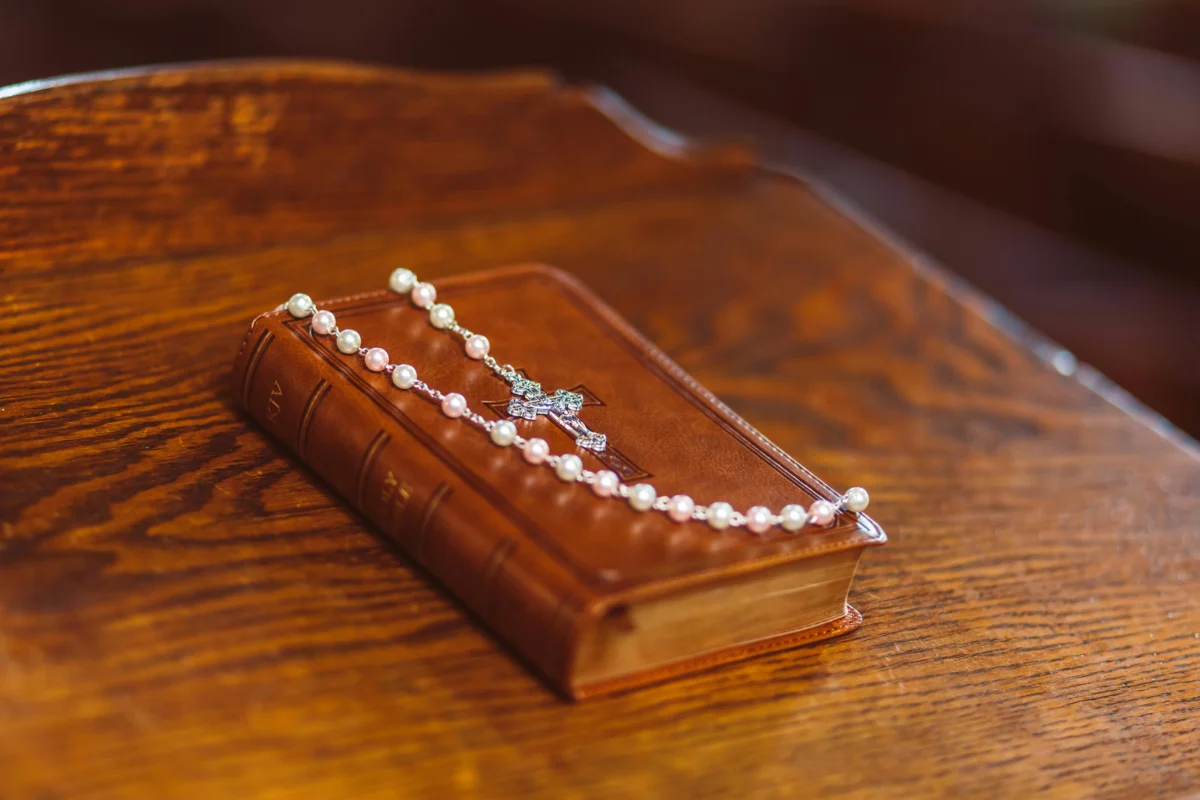
The 59-bead rosary is the standard, but not the only form the rosary takes. Different types of rosaries exist for different purposes, and the bead count changes accordingly.
The Standard Five Decade Rosary contains 59 beads as described throughout this article. It is the most widely used rosary in the Catholic world and is available in a wide range of materials, from crystal to wood. The blue crystal Catholic rosary necklace and the deep red Catholic rosary necklace are both classic five decade rosaries designed for daily prayer.
The One-Decade Rosary contains just 10 small beads and 1 large bead. Also called a pocket rosary or chaplet, it is designed for convenience — easy to carry in a pocket or wear on the wrist. It allows for praying a single decade at a time rather than a full five decades.
The Fifteen-Decade Rosary contains 150 Hail Mary beads and 15 Our Father beads. This form was the original rosary before Pope John Paul II added the Luminous Mysteries. It is still used today primarily by religious orders and those committed to a full daily rosary.
The Rosary Bracelet typically contains 10 beads and a small cross or medal, designed to be worn on the wrist. It serves as both a wearable sign of faith and a functional prayer tool for praying a single decade.
The Rosary Ring features 10 small bumps around a finger ring along with a crucifix. It is one of the most discreet and portable forms of the rosary, historically used during times of religious persecution when Catholics could not openly carry a rosary.
What Are Rosary Beads Made Of?
Rosary beads have been crafted from countless materials throughout history, and the material often carries its own significance and meaning.
Wood is one of the most traditional and widely used materials. The Italian walnut wood Catholic rosary is a beautiful example of this tradition — warm to the touch, lightweight, and deeply connected to centuries of Catholic craftsmanship. Similarly, the Italian olive wood Catholic rosary carries special meaning because olive wood is historically associated with the Garden of Gethsemane, where Christ prayed before His crucifixion.
Crystal and glass beads produce rosaries of striking beauty. Crystal rosaries catch and refract light, making them a popular choice for both prayer and as meaningful gifts. The Italian silver steel Catholic rosary offers a durable and elegant option for those who prefer a metal finish.
Semi-precious stones including agate, amber, jasper, amethyst, and rose quartz are used in gemstone rosaries. Each stone carries its own symbolic meaning — rose quartz for love, black onyx for strength — making gemstone rosaries deeply personal choices.
Relic rosaries represent a unique and sacred category. The Saint Padre Pio relic rosary contains a third-class relic, connecting the person praying to the intercession of one of the most beloved saints of the 20th century.
Today, most rosaries used worldwide are made of glass, plastic, or wood — practical, accessible, and available to Catholics in every part of the world.
A Brief History of the Rosary
The rosary as Catholics know it today traces its origins to the 13th century and Saint Dominic de Guzman, founder of the Dominican Order. According to Catholic tradition, the Virgin Mary appeared to Saint Dominic in a vision in 1208 and presented him with the rosary, asking that Christians pray the Hail Mary, Our Father, and Glory Be rather than the Psalms.
The original rosary of Saint Dominic contained 15 decades, corresponding to 15 mysteries. For centuries this 15-decade form remained the standard until Pope John Paul II added the five Luminous Mysteries in 2002, expanding the total mysteries to 20 and giving the Church the modern 20-mystery rosary prayed today.
The Catholic Church celebrates the Feast of Our Lady of the Rosary on October 7th each year, and the entire month of October is dedicated to the rosary — a reflection of how central this devotion remains in Catholic life worldwide.
Conclusion
A rosary contains 59 beads — 53 small Hail Mary beads, 6 large Our Father beads, and a crucifix — each one placed with purpose, each one guiding the faithful through one of the most powerful prayer traditions in the history of the Catholic Church. The rosary bead count is not arbitrary. It is a carefully designed structure built to carry your prayers through the mysteries of Christ’s life, from the joy of the Incarnation to the glory of the Resurrection.
Whether you are praying the rosary for the first time or deepening a lifelong devotion, the beads beneath your fingers are connecting you to centuries of Catholic faith. If you are ready to begin or looking for a rosary that will accompany your daily prayer life, browse the complete rosary collection at Sanctum Veritas and find a rosary crafted with the care and devotion this sacred prayer deserves.
Frequently Asked Questions
A standard Catholic rosary necklace contains 59 beads — 53 small Hail Mary beads, 6 large Our Father beads, plus a crucifix at the opening of the tail strand.
The 59-bead count reflects the exact number of prayers needed to complete one full rosary cycle — 53 Hail Marys, 6 Our Fathers, along with the Apostles’ Creed, Glory Be prayers, and the Fatima Prayer recited between decades.
A decade is one group of 10 small Hail Mary beads preceded by one large Our Father bead. Each decade is dedicated to one mystery from the lives of Jesus and Mary. A standard rosary has five decades.
There are 6 Our Father beads on a standard rosary — 1 on the opening tail strand and 5 separating the five decades of the main loop.
Yes. The beads are a physical counting tool, not a requirement. The prayers of the rosary can be counted on your fingers, with loose stones, or even mentally. The beads simply free the mind from counting so it can focus fully on prayer and meditation.
There are 20 mysteries in total — 5 Joyful Mysteries, 5 Sorrowful Mysteries, 5 Glorious Mysteries, and 5 Luminous Mysteries. Five mysteries are prayed during each rosary session, one per decade.